
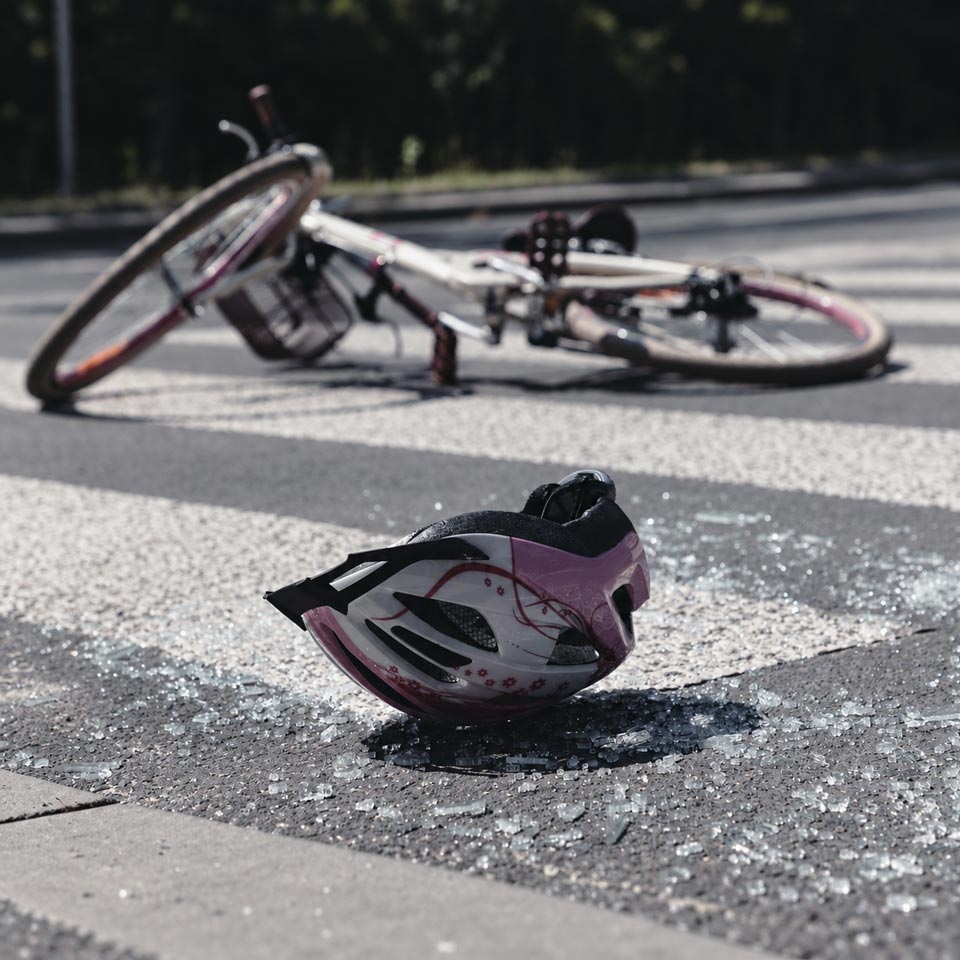
A cycling accident can cause far more than a damaged bike. Even a relatively low-speed collision can result in fractures, head injuries, scarring, psychological trauma, time away from work and months of rehabilitation. More serious cycling accidents can affect a person’s ability to work or live independently for the rest of their life.
If somebody else caused your accident through negligence, you may be able to claim compensation for both your injuries and the financial consequences of what happened.
At ASL Solicitors, we specialise in cycling accident claims and personal injury cases. We can investigate how your accident happened, identify who may be responsible and calculate the different losses that should form part of your claim. We are based in Rochdale and assist injured cyclists across Rochdale, Greater Manchester and surrounding areas.
This guide explains what cycling accident compensation can cover, when a claim is realistically likely to succeed, situations where liability can be more difficult to establish and the factors that can significantly affect the value of a claim. It focuses primarily on the law in England and Wales and is accurate as of September 2026.
When can you claim compensation after a cycling accident?
You will generally need to show that another person or organisation owed you a duty of care, failed to meet the required standard of care and caused your injury or financial loss as a result.
For example, a driver may be liable if they turn across the path of a cyclist without checking properly, pass dangerously close, open a vehicle door into a cyclist’s path or fail to give way at a junction.
The Highway Code recognises a hierarchy of road users. It states that those responsible for vehicles capable of causing the greatest harm bear the greatest responsibility to reduce the danger they pose to others. Cyclists are among the vulnerable road users identified by the Code.[1]
This does not mean that a motorist is automatically legally responsible whenever a cyclist is injured. Liability still depends on what actually happened. However, the Highway Code can be highly relevant when deciding whether the standard of driving was reasonable.
Section 38 of the Road Traffic Act 1988 allows provisions within the Highway Code to be relied upon as evidence in civil or criminal proceedings, even where a particular advisory rule is not itself a separate criminal offence.[2]
What compensation can you claim after a cycling accident?
A compensation claim is not simply a payment for the physical injury. The purpose of damages is, as far as money reasonably can, to compensate you for the effects of the accident and put you back into the financial position you would have been in had it not happened.
A cycling accident claim may therefore include:
- Pain, suffering and loss of amenity, including physical injuries, ongoing pain, scarring, reduced mobility and loss of enjoyment of hobbies or everyday activities.
- Psychological injuries, such as anxiety, post-traumatic stress disorder, depression or a fear of cycling or travelling on roads.
- Past loss of earnings, including salary, overtime, bonuses or self-employed income lost while recovering.
- Future loss of earnings where an injury reduces your ability to work, forces a change of career or prevents you from returning to employment.
- Pension losses where a serious injury affects future pension contributions or retirement income.
- Medical treatment and rehabilitation, including physiotherapy, psychological treatment, occupational therapy, private scans, specialist consultations and surgery where appropriate.
- Care and assistance, including professional care or help provided by relatives with washing, dressing, cooking, cleaning, shopping or childcare.
- Travel expenses, including taxis, public transport and travel to medical appointments.
- Damage to your bicycle and equipment, including the bicycle itself, helmet, clothing, lights, GPS equipment and other damaged belongings.
- Future care and equipment in serious injury cases, including wheelchairs, mobility aids, prosthetics, specialist equipment and case management.
- Accommodation and home adaptations where disability makes the claimant’s existing home unsuitable.
- Other accident-related expenses that can be shown to have resulted from the injury.
The value of each element must be supported by evidence. This is why payslips, tax records, receipts, invoices, medical reports and evidence of future needs can become extremely important.
Compensation for the injury itself
The part of a claim compensating you for pain, suffering and loss of amenity is commonly referred to as general damages.
There is no single fixed payment for a broken wrist, head injury or fractured collarbone. The seriousness of the injury, recovery period, medical treatment, lasting symptoms, scarring and effect on your daily life can all influence the valuation.
Solicitors and courts use previous cases together with the Judicial College Guidelines when assessing general damages. The current 18th edition contains guideline brackets for many different categories of injury.[3]
Two cyclists with apparently similar fractures can therefore receive very different overall settlements. One person may recover fully within several months, while another may require surgery, develop permanent restricted movement and be unable to return to their previous occupation.
Loss of earnings after a cycling accident
Loss of earnings can form a substantial part of a cycling accident claim.
If you are employed and spend six weeks away from work without receiving your normal salary, the difference in your earnings may be recoverable. Claims can also take account of missed overtime, commission and bonuses where these can be properly evidenced.
Self-employed cyclists may need to provide accounts, tax returns, invoices, contracts and evidence of previous trading performance. Calculating losses can be more complicated where income changes from month to month.
Serious injuries can result in much larger future earnings claims. For example, somebody with a permanent hand injury may still be capable of working but unable to return to a skilled manual occupation. A professional whose injuries affect fine motor control, concentration or physical stamina may also suffer substantial long-term losses even though they remain employed.
Future pension losses and disadvantage on the labour market may also need to be considered.
Compensation for serious and life-changing cycling injuries
Serious cycling accidents can lead to traumatic brain injuries, spinal injuries, paralysis, amputations, multiple fractures and permanent neurological damage.
In these cases, calculating compensation is considerably more complex because the claim may have to provide financial support for decades.
Medical experts may be required from several disciplines. Evidence can also be needed from occupational therapists, care experts, accommodation specialists, employment experts, accountants and other professionals.
Future compensation could include ongoing carers, rehabilitation, therapies, adapted vehicles, specialist equipment, loss of earnings and the cost of purchasing or adapting suitable accommodation.
For serious long-term injuries, future financial losses paid as a lump sum are also affected by the Personal Injury Discount Rate. The rate for England and Wales has been 0.5% since 11 January 2025.[4]
This is one reason why apparently similar serious injuries can result in very different compensation figures depending on the injured person’s age, occupation, earnings and future care requirements.
Can you claim for a damaged bicycle?
Yes. Damage to your bike and cycling equipment can normally be included where another party is liable for the accident.
You should keep the damaged bicycle and equipment until their condition has been documented and the claim has been assessed. Repair estimates, photographs, receipts and evidence of the bicycle’s age and specification can be useful.
Compensation does not necessarily mean receiving the original retail price of an older bicycle. The appropriate figure may depend on its reasonable pre-accident value or the cost of repair. Cycling UK’s guidance similarly explains that depreciation and wear may need to be considered when assessing damaged bicycle claims.[5]
Common cycling accident scenarios and who may be responsible
| Accident scenario | Who may potentially be responsible? | Important liability issues |
|---|---|---|
| Driver turns across a cyclist at a junction | Driver and their motor insurer | Position of both road users, signals, visibility, CCTV, dashcam footage and Highway Code Rule H3. |
| Dangerously close overtake | Driver and their insurer | Passing distance, speed, road width and camera or witness evidence. |
| Driver or passenger opens a car door | Potentially the person opening the door and relevant insurer | Whether proper checks were made before the door was opened. |
| Hit-and-run collision | Motor Insurers’ Bureau if the driver cannot be traced | Police report, CCTV, registration details, witnesses and evidence of the collision. |
| Uninsured driver | Motor Insurers’ Bureau may compensate eligible victims | The circumstances must meet the applicable MIB agreement. |
| Pothole or defective road surface | Potentially the highway authority | Whether the highway was dangerous and whether the authority can establish the statutory section 58 defence. |
| Loose debris, oil or material left on the road | Potentially a local authority, contractor, business or vehicle operator | Who created or controlled the hazard and whether reasonable steps should have been taken. |
| Unsafe road works | Potentially a contractor, utility company or highway authority | Signage, barriers, temporary road layout and responsibility for the works. |
| Dangerous cycle path or privately operated trail | Potentially the landowner, occupier or organisation responsible | Maintenance, warnings, design and the duty owed to lawful visitors. |
| Defective bicycle or cycling component | Potentially a manufacturer, producer, importer, retailer or other responsible business | Whether the product was defective and whether that defect caused the accident. |
| Collision caused by another cyclist | The other cyclist | Whether they rode negligently, evidence of fault and whether insurance or assets are available to meet the claim. |
Claims after a driver turns across your path
Junction collisions are a common type of cycling claim.
Rule H3 of the Highway Code states that drivers and motorcyclists should not cut across cyclists travelling ahead when turning into or out of a junction or changing lane. It applies whether the cyclist is riding on the road, in a cycle lane or on a cycle track.[1]
A driver should wait for a safe gap rather than completing a turn that forces the cyclist to stop or swerve.
Where CCTV or dashcam footage shows a cyclist travelling straight ahead and a driver suddenly turns across their path, the evidence on liability may be relatively strong. However, factors such as speed, road position, traffic signals and the actions of both parties still need to be considered.
Can you claim after a dangerous close pass?
Potentially, yes.
Rule 163 of the Highway Code advises motorists to leave at least 1.5 metres when overtaking cyclists at speeds of up to 30 mph and more space at higher speeds. Drivers should remain behind if there is not enough room to overtake safely.[6]
A cyclist who is physically struck during an unsafe overtake may have strong evidence of negligence. Claims can also arise where a dangerously close pass forces the cyclist off the road or causes them to collide with another hazard.
What about a car door being opened into a cyclist?
These incidents are sometimes known as “dooring” accidents.
Rule 239 of the Highway Code states that people in vehicles must ensure they do not hit anyone when opening a door and should check for cyclists and other traffic. The Code also recommends the technique commonly known as the Dutch Reach, which encourages occupants to turn and look behind before opening the door.[7]
Depending on the circumstances, a claim may be possible where a driver or passenger opens a door directly into the path of an approaching cyclist.
Can you claim compensation after hitting a pothole?
Pothole claims can be much more difficult than claims involving an obviously negligent motorist.
Section 41 of the Highways Act 1980 imposes a duty on highway authorities to maintain highways that are maintainable at public expense.[8]
However, the presence of a pothole does not automatically mean that the council must pay compensation.
Under section 58 of the Highways Act 1980, a highway authority may have a defence if it can show that it took such care as was reasonably required to ensure that the relevant part of the highway was not dangerous for traffic. Matters such as the character of the road, expected traffic, appropriate maintenance standards, inspection systems and information available to the authority can be relevant.[9]
A pothole claim may therefore be stronger where evidence shows that the defect was significant, had existed for some time, had previously been reported, should reasonably have been discovered during inspections or had not been dealt with appropriately.
Conversely, a claim may fail even after a serious accident if the authority can demonstrate an adequate inspection and maintenance system and had no reasonable opportunity to identify and repair the defect before the accident.
This is why photographs showing the dimensions of the pothole, its position in the road and its condition immediately after the accident can be particularly important.
What if road works, debris or an oil spill caused the accident?
Responsibility will depend on who created the hazard and who had responsibility for controlling the area.
For example, a contractor carrying out road works may potentially be responsible if barriers or equipment are placed dangerously. A vehicle operator could potentially be liable if its vehicle deposits oil or another substance onto the carriageway and this causes a foreseeable accident.
These cases can require investigation before the correct defendant is known. CCTV, council records, maintenance records, contractor documentation and witness statements may become important.
Claims involving dangerous cycle paths or private land
Not every cycling accident occurs on a public road.
If an accident happens on private premises, a privately maintained cycle route, leisure facility or another location controlled by an occupier, the Occupiers’ Liability Act 1957 may be relevant.
The Act imposes a common duty of care towards lawful visitors, requiring an occupier to take reasonable care to see that visitors will be reasonably safe when using the premises for the purposes for which they are invited or permitted to be there.[10]
A claim may therefore be considered where an accident results from a dangerous defect, badly maintained surface, unsafe obstruction or another hazard that should reasonably have been dealt with or adequately warned about.
What if the bicycle itself was defective?
A cycling accident can occasionally be caused by a defective frame, fork, wheel, brake, handlebar, seat, component or other equipment rather than another road user.
Part I of the Consumer Protection Act 1987 provides a framework for claims involving defective products. A product can be considered defective where its safety is not such as people generally are entitled to expect, taking the relevant circumstances into account.[11]
Product liability claims can be technically complex. The bicycle or component should normally be preserved so that its condition can be investigated. Engineering evidence may be required to establish what failed and why.
Can you claim if the driver was uninsured?
Yes, potentially.
The Motor Insurers’ Bureau exists to compensate eligible victims of accidents involving uninsured and untraced motorists. The MIB may therefore provide a route to compensation where the driver responsible had no valid insurance.[12]
An uninsured driver does not automatically mean that an injured cyclist is left without compensation.
Can you claim after a hit-and-run cycling accident?
A claim may still be possible even where the driver cannot be identified.
The MIB’s Untraced Drivers’ arrangements cover qualifying accidents involving drivers who leave the scene or cannot subsequently be identified.[12]
These cases make early evidence particularly important. Reporting the collision to the police, obtaining CCTV, recording witness details and preserving photographs can make a substantial difference.
What happens if you were partly responsible for the cycling accident?
Being partly at fault does not necessarily mean that you receive nothing.
The Law Reform (Contributory Negligence) Act 1945 allows compensation to be reduced by an amount considered just and equitable where the claimant’s own actions contributed to the damage.[13]
For example, an insurer could argue that a cyclist was travelling too quickly for the circumstances, failed to observe a signal or positioned themselves unsafely. If a court concluded that the motorist was primarily responsible but the cyclist also contributed to the collision, damages could potentially be reduced by a percentage rather than the entire claim failing.
Does not wearing a helmet stop you claiming?
No. The absence of a helmet does not automatically prevent a cyclist from claiming compensation.
There have been cases where defendants have argued that damages should be reduced because a cyclist was not wearing a helmet. Whether such an argument has any effect depends on issues including the particular injury and whether a helmet would actually have prevented or reduced it.
This can be a complex contributory negligence issue and should not be treated as an automatic deduction.
When is a cycling accident claim realistically likely to succeed?
No solicitor can guarantee the outcome of a personal injury claim. However, some cases have considerably stronger evidence than others.
| Factors that may strengthen a claim | Factors that may make a claim more difficult |
|---|---|
| CCTV, dashcam or helmet-camera footage clearly showing the accident. | No independent evidence and completely conflicting accounts of what happened. |
| Independent witnesses support the cyclist’s account. | Evidence indicates that no other person or organisation was at fault. |
| The driver admits responsibility. | The accident appears to have resulted solely from the cyclist losing control. |
| Vehicle position or damage supports the cyclist’s version of events. | The cyclist’s account is inconsistent with CCTV or other objective evidence. |
| A dangerous highway defect can be documented and maintenance evidence supports the claim. | A council establishes a strong section 58 defence showing a reasonable inspection and maintenance system. |
| Medical evidence clearly links the injuries to the accident. | There is no medical evidence demonstrating an injury or causal connection. |
| Financial losses can be supported by payslips, accounts, receipts and expert evidence. | Losses are speculative or cannot be evidenced. |
At ASL Solicitors, we can assess these issues before advising whether a claim has reasonable prospects of success. A case should be assessed on its evidence rather than simply on the fact that a cyclist was injured.
When might you not be entitled to compensation?
Unfortunately, suffering an injury does not itself create a legal right to compensation.
You may have difficulty bringing a successful claim if you simply lose control of your bicycle without any defect or negligence by somebody else. The same could apply where you collide with a clearly visible stationary object entirely because of your own riding.
A claim may also fail where the defendant can demonstrate that they acted reasonably and did not breach their duty of care.
Pothole cases provide a good example. A cyclist can suffer a genuinely serious injury but still lose the legal claim if the highway authority establishes that it operated an appropriate system of inspections and maintenance and could not reasonably have been expected to repair the defect before the accident.
There can also be situations where liability exists but the claimant is unable to prove that the accident caused the injuries or financial losses being claimed.
What evidence should you keep?
Evidence can disappear quickly, particularly CCTV footage. Where possible, useful evidence may include:
- Photographs and video of the accident scene, road layout, pothole or other hazard.
- Helmet camera, dashcam, CCTV or doorbell footage.
- Driver, vehicle and insurance details.
- Witness names and contact information.
- Police and ambulance reference numbers.
- Medical records and details of treatment.
- Photographs of injuries as they develop.
- The damaged bicycle, helmet and equipment.
- Payslips, accounts and evidence of lost income.
- Receipts and invoices for treatment, travel and other expenses.
ASL Solicitors has also published a separate guide explaining what evidence you need for a personal injury claim.
Are cyclists affected by the whiplash reforms?
Cyclists are treated differently from most people making low-value injury claims as occupants of motor vehicles.
The Civil Procedure Rules categorise cyclists as vulnerable road users. The RTA Small Claims Protocol and Official Injury Claim process exclude vulnerable road users, including cyclists.[14]
This means the £5,000 road traffic accident injury small claims threshold and associated Official Injury Claim procedure that apply to many car occupants do not generally apply to injured cyclists in the same way.
How long do you have to make a cycling accident claim?
Under section 11 of the Limitation Act 1980, the usual limitation period for a personal injury claim in England and Wales is three years from the date on which the cause of action accrued or the injured person’s date of knowledge, if later.[15]
There are important exceptions.
If the cyclist was under 18 at the time of the accident, the ordinary three-year period generally does not start until their 18th birthday, meaning that they will usually have until their 21st birthday to commence proceedings if a claim has not already been brought on their behalf.
Different rules can also apply to people who lack the relevant mental capacity, and the court has limited discretion under section 33 of the Limitation Act to allow certain personal injury claims to continue after the normal period has expired.
You should not rely on an exception without obtaining advice. Starting an investigation early also makes it easier to preserve CCTV, witnesses and other important evidence.
Why cycling accident compensation can vary significantly
There is no standard compensation figure for a cycling accident. Two people involved in similar collisions can receive very different amounts because compensation is based on the individual consequences of the accident.
For example, a cyclist who suffers a fracture but makes a complete recovery within several months will generally have a very different claim from somebody who suffers a permanent disability, requires ongoing treatment or is unable to return to their previous occupation.
The overall value of a cycling accident claim can be influenced by factors including the seriousness of the injuries, the length of recovery, whether symptoms are permanent, the effect on employment, future care needs, rehabilitation costs and the amount of financial loss caused by the accident.
Serious and life-changing injuries can result in substantially higher compensation because a settlement may need to account for losses and care requirements extending many years into the future.
It is therefore important not to compare your claim directly with compensation figures reported in the media or in other personal injury cases. The circumstances of every accident and every injured person are different.
At ASL Solicitors, we assess each cycling accident claim individually. We consider the medical evidence, financial losses, impact on employment and any likely future needs before estimating what compensation may reasonably be pursued. No particular settlement figure or outcome can be guaranteed.
What compensation can families claim after a fatal cycling accident?
Where a cyclist dies because of another person’s negligence, compensation may be available to their estate and qualifying dependants.
The Fatal Accidents Act 1976 allows claims for certain financial dependency losses and funeral expenses. Eligible claimants may also qualify for the statutory bereavement award.[16]
The statutory bereavement award in England and Wales remains £15,120 for relevant causes of action arising on or after 1 May 2020. In June 2026, the Ministry of Justice confirmed that there were no current plans to review the level of the award.[17]
However, the bereavement award should not be confused with the entire value of a fatal accident claim. Dependency on the deceased person’s earnings, pension, childcare, household services and other financial contributions can result in substantially larger claims.
The deceased person’s estate may also have separate rights under the Law Reform (Miscellaneous Provisions) Act 1934.
Can you receive compensation before the claim finishes?
In appropriate serious injury cases, interim payments may sometimes be obtained before the final claim has settled.
This can be important where somebody is unable to work or urgently needs rehabilitation, specialist equipment, care or accommodation.
Whether an interim payment is available depends on the circumstances, including the position on liability and the likely eventual value of the claim.
Should you accept an early offer from an insurer?
Care should be taken before accepting an early settlement, particularly where your medical prognosis is still uncertain.
A fractured wrist that initially appears likely to heal within a few months may later require surgery or result in permanent restricted movement. A head injury can also have cognitive or psychological consequences that are not immediately obvious.
Once a personal injury claim has been settled on a final basis, it will normally not be possible to return later simply because the injury turns out to be worse than expected.
We therefore consider the medical evidence and likely future consequences before advising whether an offer represents a reasonable settlement.
How ASL Solicitors can help with a cycling accident claim
At ASL Solicitors, we understand that cycling claims can involve more than simply contacting a motor insurer.
A driver may deny responsibility. A council may rely on the statutory section 58 defence. The motorist may be uninsured or impossible to trace. A serious injury may require evidence from several medical specialists and detailed calculations of future earnings, care and rehabilitation costs.
We can assess the circumstances of your accident, identify the correct defendant, obtain evidence, arrange appropriate medical assessments, calculate your financial losses and negotiate the claim on your behalf.
We also understand the importance of looking at the long-term position rather than focusing only on the immediate injury. Where somebody has suffered a serious injury, the purpose of a settlement may be to support them for many years into the future.
We are based in Rochdale and provide cycling injury claim services to people in Rochdale, Greater Manchester and surrounding areas.
If you have been injured while cycling and believe another person or organisation was responsible, get in touch with ASL Solicitors. We can review what happened, assess the available evidence and give you a realistic view of your options. Every case is different and compensation can never be guaranteed, but obtaining advice early can help preserve evidence and protect your position.
Frequently asked questions about cycling accident compensation
What can I claim compensation for after a cycling accident?
You may be able to claim for pain and suffering, psychological injuries, loss of earnings, future earnings, medical treatment, rehabilitation, care, travel expenses, damaged cycling equipment and other financial losses caused by the accident. Serious injury claims can also include future care, accommodation, specialist equipment and pension losses.
Can I claim compensation if a car hit me while cycling?
Potentially. If the driver caused the collision through negligence, you may be able to claim against their motor insurer. Common examples include drivers turning across cyclists, failing to give way, overtaking dangerously or driving into a cycle lane.
How much compensation will I receive after a cycling accident?
There is no fixed amount. Compensation depends on your injuries, recovery, financial losses and future needs. Minor injuries may result in relatively modest awards, while permanent injuries involving long-term loss of earnings, care or disability can result in significantly higher compensation.
Can I claim for loss of earnings after a cycling accident?
Yes. If your injuries prevented you from working or reduced your income, loss of earnings may form part of your claim. Serious injuries may also justify compensation for future earnings and pension losses.
Can I claim for damage to my bike?
Yes. The reasonable cost of repairing your bicycle or its pre-accident value where it is beyond economical repair may potentially be included. Damaged helmets, clothing, lights and cycling equipment may also form part of the claim.
Can I claim if a pothole caused my cycling accident?
Possibly. Highway authorities have maintenance duties under the Highways Act 1980, but councils can rely on the section 58 statutory defence if they can demonstrate that reasonable care was taken. Pothole claims therefore depend heavily on inspection, maintenance and defect evidence.
Can I claim if the driver was uninsured?
Potentially. The Motor Insurers’ Bureau can compensate eligible victims of accidents caused by uninsured motorists.
Can I claim after a cycling hit-and-run?
Yes, a claim may still be possible through the Motor Insurers’ Bureau where the responsible driver cannot be traced. Report the incident to the police and preserve as much evidence as possible.
Can I claim if I was partly at fault?
Yes, potentially. Under the Law Reform (Contributory Negligence) Act 1945, compensation can be reduced to reflect your share of responsibility rather than the claim automatically failing.
Can I claim if I was not wearing a cycling helmet?
Not wearing a helmet does not automatically prevent you from claiming. An insurer may raise contributory negligence arguments in some head injury cases, but the effect depends on the individual circumstances and whether a helmet would have prevented or reduced the particular injury.
How long do I have to make a cycling accident claim?
In most personal injury cases in England and Wales, the usual limitation period is three years from the accident or later date of knowledge. Different rules apply to children and some people who lack capacity.
Do cyclists have to use the Official Injury Claim portal?
No. Cyclists are classed as vulnerable road users and are excluded from the Official Injury Claim small claims process that applies to many low-value claims involving occupants of motor vehicles.
What happens if the cycling accident caused a permanent disability?
A serious injury claim can take account of lifelong consequences, including future loss of earnings, professional care, rehabilitation, home adaptations, specialist equipment, mobility needs and future medical treatment. Expert evidence will usually be required to assess these losses properly.
Do cycling accident claims normally go to court?
Many claims settle through negotiation without a trial. Court proceedings may be necessary where liability is disputed, the parties cannot agree the value of the claim or proceedings must be issued to protect the limitation position. Starting court proceedings does not necessarily mean that the case will ultimately be decided at trial.
Can ASL Solicitors assess whether my cycling claim is likely to succeed?
Yes. At ASL Solicitors, we can review how the accident happened, the evidence available, your injuries and the likely defendant before advising on the prospects of bringing a claim. Contact us to discuss your circumstances.
References
1) Department for Transport – The Highway Code: Introduction and hierarchy of road users:
https://www.gov.uk/guidance/the-highway-code/introduction
2) Road Traffic Act 1988 – Section 38, The Highway Code:
https://www.legislation.gov.uk/ukpga/1988/52/section/38
3) Judicial College – Guidelines for the Assessment of General Damages in Personal Injury Cases, 18th Edition:
https://uk.practicallaw.thomsonreuters.com/Browse/Home/Books/Judicial
4) Ministry of Justice – Personal Injury Discount Rate:
https://www.gov.uk/guidance/personal-injury-discount-rate
5) Cycling UK – Cycling UK Small Claims Pack:
https://www.cyclinguk.org/sites/default/files/downloads/2023-09/fletchers_cycle_sos.pdf
6) Department for Transport – The Highway Code: Using the road, Rule 163:
https://www.gov.uk/guidance/the-highway-code/using-the-road-159-to-203
7) Department for Transport – The Highway Code: Waiting and parking, Rule 239:
https://www.gov.uk/guidance/the-highway-code/waiting-and-parking-238-to-252
8) Highways Act 1980 – Section 41, duty to maintain highways maintainable at public expense:
https://www.legislation.gov.uk/ukpga/1980/66/section/41
9) Highways Act 1980 – Section 58, special defence for highway authorities:
https://www.legislation.gov.uk/ukpga/1980/66/section/58
10) Occupiers’ Liability Act 1957 – Common duty of care:
https://www.legislation.gov.uk/ukpga/Eliz2/5-6/31
11) Consumer Protection Act 1987 – Product liability and meaning of defect:
https://www.legislation.gov.uk/ukpga/1987/43
12) Motor Insurers’ Bureau – Check your eligibility before making a claim:
https://www.mib.org.uk/make-a-claim/can-i-claim-with-mib/
13) Law Reform (Contributory Negligence) Act 1945:
https://www.legislation.gov.uk/ukpga/Geo6/8-9/28
14) Ministry of Justice – Pre-Action Protocol for Personal Injury Claims Below the Small Claims Limit in Road Traffic Accidents:
https://www.justice.gov.uk/courts/procedure-rules/civil/protocol/pre-action-protocol-for-personal-injury-claims-below-the-small-claims-limit-in-road-traffic-accidents-the-rta-small-claims-protocol
15) Limitation Act 1980 – Section 11, personal injury claims:
https://www.legislation.gov.uk/ukpga/1980/58/section/11
16) Fatal Accidents Act 1976:
https://www.legislation.gov.uk/ukpga/1976/30
17) UK Parliament – Accidents: Compensation, statutory bereavement award, answered 12 June 2026:
https://questions-statements.parliament.uk/written-questions/detail/2026-06-03/6515/