
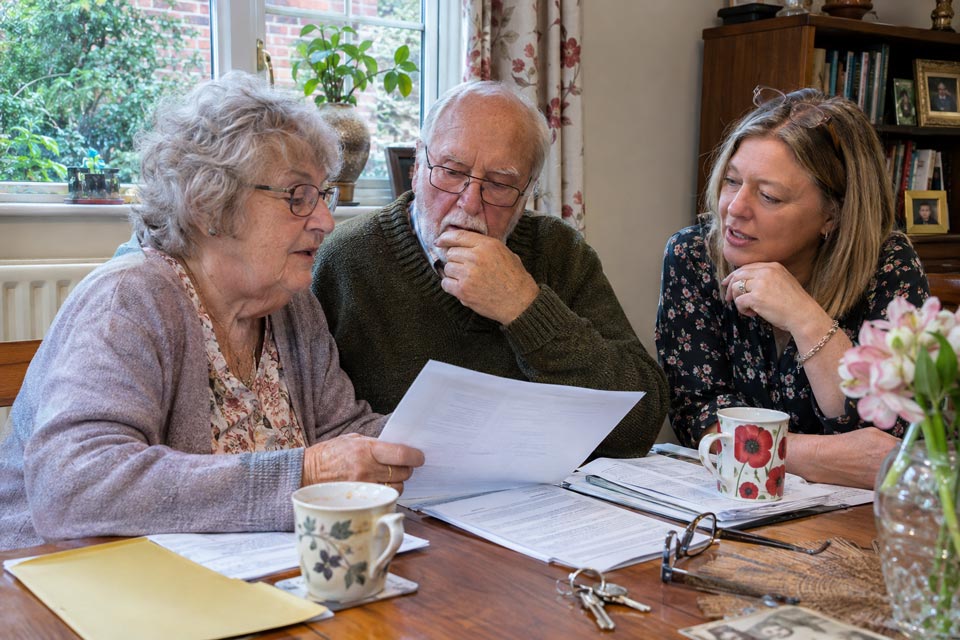
Many parents would like to pass their home on to their children while they are still alive. Whether you want to help your children financially, simplify your estate or reduce a potential inheritance tax bill, gifting your property may seem like an attractive option.
In the UK, you can legally gift your house to your children. However, transferring ownership is a significant decision with potential consequences for your finances, future housing arrangements and tax liabilities. Giving your house away does not necessarily mean it will be excluded from inheritance tax or protected against future care home fees.
At ASL Solicitors, we help families in Rochdale, Greater Manchester and beyond with estate planning, property transfers and trusts. In this guide, we explain how gifting your home works, the legal requirements involved and the important considerations before proceeding.
Is It Legal to Gift Your House to Your Children?
Yes. If you own a property, you can generally transfer ownership to one or more of your children without receiving payment in return. This is sometimes referred to as a gift of property or a transfer of equity, depending on the circumstances.
There is no requirement for your children to reach a particular age before they can benefit from a property gift. However, children under 18 cannot hold the legal estate in land in England and Wales, so an appropriate trust arrangement would be required.
You must also have the legal authority and mental capacity to make the gift. If you own the property jointly with somebody else, their involvement will usually be necessary to transfer the whole property. Where a mortgage is outstanding, the lender’s agreement may also be required.
Most importantly, a genuine gift means giving up ownership and the associated rights. Once the transfer has been completed, you cannot simply demand the property back because your circumstances have changed.
How Do You Gift Your House to Your Children?
Gifting a house involves a formal legal transfer. Simply writing a letter stating that you are giving your property to your children is not enough to complete the transfer of a registered property.
For property in England and Wales, the process typically involves the following steps:
- Obtain a property valuation. Establishing the property’s current market value is important for tax calculations and recording the gift.
- Review the ownership and mortgage arrangements. Your solicitor will examine the title, establish who owns the property and identify any restrictions or outstanding mortgage.
- Consider the tax and legal consequences. Before proceeding, you should understand the potential inheritance tax, capital gains tax and stamp duty implications.
- Prepare the transfer documents. A solicitor or conveyancer will typically prepare a TR1 transfer deed for a whole-property transfer, together with any other documents required.
- Sign the documentation. The necessary parties must execute the relevant legal documents, with signatures witnessed where required.
- Register the transfer. The application is submitted to HM Land Registry, generally using form AP1 for an already registered property, so the ownership records can be updated.
The process may be more complicated if the property is leasehold, mortgaged, jointly owned or being transferred into a trust. Some leasehold properties also require a landlord’s consent or compliance with restrictions in the lease.[1]
Our transfer of equity solicitors can explain the requirements for your property and help you complete the necessary legal documentation.
Can You Gift Your House to an Only Child?
If you have one child, you can transfer the entire property into their name, provided any applicable legal and mortgage requirements are satisfied.
For example, imagine you are a widowed homeowner aged 68, with a mortgage-free house worth £280,000. You want to transfer the property to your only daughter, who is financially independent.
You could arrange for the property to be legally transferred into your daughter’s name without receiving payment. Once the transfer is registered, she would become the legal owner.
However, this raises an important question: where will you live after gifting the property?
If you intend to move elsewhere, the arrangement may be relatively straightforward. If you want to continue living in the property, the inheritance tax rules become more complicated. You may need to pay your daughter a genuine market rent to avoid retaining a benefit from the gift.
You should also consider what would happen if your daughter divorced, experienced financial difficulties, became bankrupt or decided to sell the property. Giving her ownership may expose the house to risks that would not exist if you retained it yourself.
Can You Gift Your House to Multiple Children?
Yes. You can gift a property to two or more children, and they do not necessarily need to receive equal shares.
For example, if you own a £360,000 house and have three children, you could arrange for each child to receive a one-third beneficial interest, worth approximately £120,000 at the time of the gift.
Alternatively, you could allocate different proportions, such as 50% to one child and 25% each to the other two. The arrangement should be clearly documented to avoid future disagreements.
Joint Tenants or Tenants in Common?
Where multiple children receive a property, the type of joint ownership is particularly important.
Joint tenants: Each owner has an equal right to the whole property. If one child dies, their interest automatically passes to the surviving joint owner or owners, rather than being inherited under their Will.
Tenants in common: Each child has a defined beneficial share, which can be equal or unequal. Their share can generally be passed on through their Will when they die.
For parents who want each child to retain a separately identifiable share, tenants in common may be more appropriate. A declaration of trust can help clarify the ownership proportions and how future decisions will be handled.
In England and Wales, a maximum of four individuals can be registered as legal owners of a property. If you want to benefit five or more children, a trust arrangement may be necessary to hold the legal title on behalf of all the beneficiaries.[2]
What Happens If Your Children Disagree About the Property?
One disadvantage of gifting property to multiple children is the potential for disagreements. One child may want to sell the house, while another may prefer to keep it as a rental property or move into it themselves.
These disputes can become particularly difficult if one child lives in the property while the others do not. A carefully drafted agreement can establish how decisions should be made, how maintenance costs are shared and what happens if one owner wants to sell their interest.
It is worth discussing these possibilities with your children before transferring ownership. What initially seems like a generous gift could otherwise create financial or personal difficulties for the family.
Will You Pay Inheritance Tax If You Gift Your House to Your Children?
Gifting your property can potentially reduce the value of your estate for inheritance tax purposes. However, whether the gift is effective depends on several factors, particularly how long you survive after making it and whether you continue benefiting from the property.
As of November 2026, the standard inheritance tax nil-rate band is £325,000 per person. An additional residence nil-rate band of up to £175,000 may be available when a qualifying home passes to direct descendants on death, subject to conditions including restrictions for estates worth more than £2 million.[3]
Importantly, gifting your property during your lifetime does not automatically give you the additional £175,000 allowance. In some circumstances, transferring your home early could mean losing a residence nil-rate band that would otherwise have been available had the property passed through your estate. Downsizing provisions and other factors may also affect the calculation.
How Does the Seven-Year Rule Apply?
Most outright gifts of property to children are treated as potentially exempt transfers for inheritance tax purposes.
Broadly speaking, if you survive for seven years after making a genuine gift, its value will normally fall outside your estate for inheritance tax purposes. If you die sooner, the gift may affect the inheritance tax calculation, depending on its value and your other gifts and allowances.
For example, if you gift your mortgage-free house to your son, move into another property and survive for more than seven years, the original gift would generally become exempt from inheritance tax.
However, the seven-year rule is not a guarantee that every property gift will become tax-free. There are important exceptions, particularly where you continue living in the property.
We have covered these rules in more detail in our existing guide: Gifts, the 7 Year Rule and Inheritance Tax Explained.
Can You Gift Your House but Continue Living in It?
Yes, but this is one of the most important areas to understand before making a property gift.
If you transfer your home into your children’s names but continue living there rent-free, HMRC may treat the arrangement as a gift with reservation of benefit.
Under Section 102 of the Finance Act 1986, property given away while the donor continues to benefit from it can remain within their estate for inheritance tax purposes. This can apply even when the original transfer took place more than seven years before death.
For example, suppose you gift your £300,000 house to your daughter in 2026 but continue living there without paying rent. If you die in 2036, the property may still be included in your estate for inheritance tax purposes, despite the gift having taken place ten years earlier.
It may be possible to avoid this treatment by paying your child a genuine market rent and contributing appropriately towards household bills. However, the arrangement needs to be properly established and maintained. The rental income could also create an income tax liability for your child.
There are limited exceptions, including certain situations involving shared occupation and gifts of only part of a property. Professional advice is essential before relying on these exceptions.[4]
What Happens If You Gift Your House and Then Go Into a Care Home?
Some homeowners consider transferring their property to their children because they are concerned about having to sell their home to fund care in later life.
However, gifting your property does not automatically protect it from being considered when your care fees are assessed.
Under the Care Act 2014 and associated statutory guidance in England, local authorities can investigate whether somebody has deliberately disposed of assets to reduce the amount they contribute towards their care.
This is known as deprivation of assets.
What If You Need Care Two or Three Years After Gifting Your House?
Imagine you gift your home to your children at the age of 78. Three years later, your health deteriorates and you need permanent residential care.
When assessing your finances, the local authority may examine the circumstances surrounding the property transfer. It will consider whether avoiding future care costs was a significant motivation and whether you could reasonably have expected to need care and support when you made the gift.
If the local authority concludes that you deliberately deprived yourself of the property to avoid care charges, it may assess you as though you still owned the asset. In certain circumstances, recovery action against someone who received the asset may also be possible.
This does not automatically mean your children must sell the house. However, it could create serious financial difficulties if you are assessed as having capital that you no longer own.
Is There a Seven-Year Rule for Care Home Fees?
No. The inheritance tax seven-year rule does not apply to deprivation of assets assessments for care fees.
There is no universal seven-year cut-off after which a property gift becomes protected from consideration. The local authority must examine the individual circumstances, including the timing, motivation and foreseeable need for care.
A genuine gift made many years before any reasonable expectation of needing care may be treated differently from a transfer made shortly before someone enters residential care. Neither outcome is automatic.[5]
Not everybody who enters residential care is required to sell their home. Property disregards, the circumstances of relatives living in the home and other funding arrangements can affect the outcome. We recommend obtaining tailored advice rather than transferring property solely to avoid potential care fees.
Can You Gift Your House to Your Children Through a Trust?
Yes. Instead of transferring a property directly into your children’s names, you may be able to place it into a trust for their benefit.
A trust is a legal arrangement in which trustees hold and manage assets for beneficiaries according to specified terms. This can provide greater control over how a property is managed and when beneficiaries can receive it.
For example, you may want your two children to benefit equally from a property, but you are concerned that one is financially inexperienced. A suitable trust could allow trustees to manage the property and determine how it is used in accordance with the trust deed.
Different types of trusts offer different levels of control. A bare trust generally gives the beneficiary an immediate entitlement to the trust assets, while a discretionary trust gives trustees greater flexibility over distributions.
What Are the Financial and Tax Implications of Putting a House Into Trust?
Placing a property into trust does not automatically avoid inheritance tax. In fact, certain arrangements can create additional liabilities.
For many discretionary trusts, transferring assets worth more than the available inheritance tax nil-rate band can trigger an immediate lifetime inheritance tax charge, generally at 20% on the chargeable excess where the trustees pay the tax. Further inheritance tax charges may arise on ten-year anniversaries or when assets leave the trust.
Capital gains tax can also arise when a property is transferred into a trust, although reliefs or deferral provisions may be available in certain circumstances. Trustees may face additional tax and administrative obligations, including registration with HMRC’s Trust Registration Service where required.
Importantly, placing your house into trust while continuing to live there may still trigger the gift with reservation of benefit rules. A trust is not a guaranteed way to avoid either inheritance tax or care home fees.[6]
At ASL Solicitors, we advise families on setting up trusts as part of wider estate planning. We can help you understand whether a trust is suitable for your circumstances and explain the responsibilities and implications involved.
Are There Other Taxes to Consider When Gifting Your House?
Inheritance tax is not the only potential tax consequence of gifting a property. Depending on your circumstances, capital gains tax and property transaction taxes may also apply.
Capital Gains Tax
For capital gains tax purposes, gifting a property to a child is generally treated as a disposal at its market value, even though no money changes hands.
If the property has been your only or main residence throughout the relevant ownership period, you may qualify for full Private Residence Relief, meaning no capital gains tax is payable on the gift.
However, gifting a second home, buy-to-let property or a former main residence could trigger a capital gains tax liability based on the property’s increase in value. The tax treatment will depend on your ownership and occupation history, available reliefs and other circumstances.[7]
Stamp Duty Land Tax
In England, gifting a mortgage-free property without receiving payment or other chargeable consideration will not normally trigger Stamp Duty Land Tax (SDLT).
However, if your child assumes responsibility for an existing mortgage, that debt can count as chargeable consideration. SDLT may then be payable depending on the amount involved and the circumstances of the transaction.
Different property transaction taxes apply in Wales and Scotland. The location of the property therefore matters, even where the transfer is being made between family members.[8]
What Are the Risks of Gifting Your House to Your Children?
While gifting a house can be a generous way to support your family, it is important to consider what you may be giving up.
Once your children become the legal owners, your future security could depend on their financial and personal circumstances. For example, their interest in the property may be affected by bankruptcy, divorce proceedings or disputes with other co-owners.
If your relationship with your child breaks down, you may have limited legal protection against decisions they make about the property. Even a close family relationship cannot guarantee that circumstances will remain unchanged.
There are also practical financial considerations. If you subsequently need to release money from your house to fund retirement, adaptations or unexpected expenses, you may no longer have the authority to sell or borrow against it.
If you are considering gifting your home, it is worth exploring whether a carefully drafted Will, a suitable trust or another estate planning arrangement would achieve your aims without requiring an immediate transfer of ownership.
What Laws Apply to Gifting Property in England and Wales?
Several important pieces of legislation affect property gifts. The applicable rules depend on how the property is owned, whether money or mortgage debt is involved and the purpose of the transfer.
Law of Property Act 1925 and Land Registration Act 2002
These Acts form part of the legal framework for transferring and registering property ownership in England and Wales. A transfer of a legal estate generally needs to be completed by deed, and a registrable transfer of registered land must be registered with HM Land Registry to take effect at law.
Inheritance Tax Act 1984 and Finance Act 1986
The Inheritance Tax Act 1984 establishes the principal framework for taxing estates, lifetime transfers and relevant trust arrangements. Section 102 of the Finance Act 1986 contains the gift with reservation rules, which can bring gifted property back into an estate where the donor continues to benefit from it.
Taxation of Chargeable Gains Act 1992
This legislation governs capital gains tax, including disposals of property. Section 17 is relevant to market value treatment for certain transactions, while Section 222 and related provisions establish the framework for Private Residence Relief.
Finance Act 2003
The Finance Act 2003 provides the legislative framework for Stamp Duty Land Tax in England. It determines how chargeable consideration, including certain mortgage obligations, is treated when property ownership changes.
Care Act 2014
The Care Act 2014 provides the framework for adult social care in England. Sections 14, 17 and 70, together with the relevant regulations and statutory guidance, are particularly relevant to charging, financial assessments and the transfer of assets intended to reduce care costs.
Mental Capacity Act 2005
A property owner must have the mental capacity required to make a valid gift. Where somebody lacks capacity, an attorney or deputy cannot ordinarily gift their house to family members simply because they believe it would reduce inheritance tax. Significant gifts generally require appropriate authority from the Court of Protection.
These laws interact, which is why a property transfer that appears straightforward can have unexpected legal or tax consequences.
Should You Gift Your House Now or Leave It to Your Children in Your Will?
There is no single answer that suits every family.
Gifting your house during your lifetime may be appropriate if you no longer need the property, are financially secure and want your children to benefit immediately. It can also form part of a wider inheritance tax planning strategy where the conditions are met.
However, leaving the property through your Will allows you to retain ownership and control during your lifetime. It may also preserve access to inheritance tax allowances that could otherwise be affected by an early gift.
Another important distinction is capital gains tax. Where property passes on death, beneficiaries generally acquire it at its probate value for capital gains tax purposes. An outright lifetime gift usually does not provide the same treatment, which can affect the tax payable if the property is subsequently sold.
Before making a decision, you should consider your financial security, potential future care needs, family circumstances and overall estate value.
Speak to ASL Solicitors About Gifting Your Property
Gifting a house to your children is a significant legal decision. Although it can be an effective way of passing on family wealth, it can also create tax liabilities, reduce your financial independence and expose your property to risks you may not have anticipated.
At ASL Solicitors, we specialise in estate planning, transfer of equity and trust arrangements. Based in Rochdale, we provide Wills and Probate services to individuals and families throughout Greater Manchester and beyond.
Whether you are considering transferring your home to one child, sharing it between several children or exploring a trust, we can discuss your individual circumstances and help you understand the options available.
Get in touch with ASL Solicitors to discuss your plans and find out how we can help you protect your interests and plan for your family’s future.
Frequently Asked Questions
Can I legally give my house to my son or daughter?
Yes. You can legally gift your house to your son or daughter by completing a formal property transfer. You will need to consider any mortgage restrictions, tax implications and the consequences of giving up ownership. A solicitor can help with the transfer and registration process.
Can I gift my house to my children and still live in it?
Yes, but if you continue living in the house rent-free, it may remain part of your estate for inheritance tax purposes under the gift with reservation of benefit rules. Paying a genuine market rent may help avoid this treatment, although the arrangement must satisfy HMRC’s requirements.
Do my children have to pay tax if I gift them my house?
Not necessarily. Receiving a genuine property gift does not ordinarily create an immediate income tax liability for your children. However, Stamp Duty Land Tax may apply if they take over mortgage debt, and capital gains tax may arise if they subsequently dispose of the property. Inheritance tax can also be relevant in certain circumstances.
Can I gift my house to two or three children?
Yes. You can transfer your property to multiple children, either in equal or unequal beneficial shares. The ownership arrangement should be documented carefully, particularly where the children want their shares to pass separately under their Wills.
Will my children have to sell my house if I go into a care home?
Not automatically. However, if you gifted your house to avoid care fees, a local authority may treat you as still owning its value when assessing your finances. Whether the house needs to be sold depends on the ownership arrangement, care funding circumstances and any applicable legal protections.
Is it better to gift a house or put it into a trust?
That depends on your objectives. An outright gift gives your children ownership, while a trust can provide greater control over how the property is managed. However, trusts can involve additional costs, tax liabilities and administrative responsibilities. Neither option automatically protects your house from inheritance tax or care fees.
Can I gift my house if I still have a mortgage?
Potentially, but you will normally need your mortgage lender’s agreement. The lender may require the mortgage to be repaid or refinanced, and your child may need to meet affordability requirements. Taking on mortgage debt can also have Stamp Duty Land Tax implications.
Can I reverse a property gift after transferring ownership?
Generally, you cannot unilaterally reverse a completed property gift. Your child would normally need to agree to transfer the property back, and that further transfer could create additional costs or tax liabilities. This is one reason why legal advice before gifting your home is so important.
References
1) HM Land Registry – Guidance: How to Complete Form TR1
https://www.gov.uk/government/publications/registered-titles-whole-transfer-tr1/guidance-completing-form-tr1-for-the-transfer-of-registered-property
2) HM Land Registry – Joint Property Ownership
https://www.gov.uk/joint-property-ownership/overview
3) HM Revenue & Customs – Inheritance Tax: Passing on a Home
https://www.gov.uk/inheritance-tax/passing-on-home
4) HM Revenue & Customs – Work Out Inheritance Tax Due on Gifts
https://www.gov.uk/guidance/work-out-inheritance-tax-due-on-gifts
5) Department of Health and Social Care – Care and Support Statutory Guidance, Annex E: Deprivation of Assets
https://www.gov.uk/government/publications/care-act-2014-supporting-implementation/care-and-support-statutory-guidance
6) HM Revenue & Customs – Trusts and Inheritance Tax
https://www.gov.uk/guidance/trusts-and-inheritance-tax
7) HM Revenue & Customs – Tax When You Sell Your Home: Work Out Your Gain
https://www.gov.uk/tax-sell-home/work-out-your-gain
8) HM Revenue & Customs – Stamp Duty Land Tax: Transfer Ownership of Land or Property
https://www.gov.uk/guidance/sdlt-transferring-ownership-of-land-or-property
Legal information accurate as of November 2026. This article provides general information, principally concerning England and Wales, and does not constitute legal or financial advice. Individual circumstances and the location of the property can affect the applicable rules.