
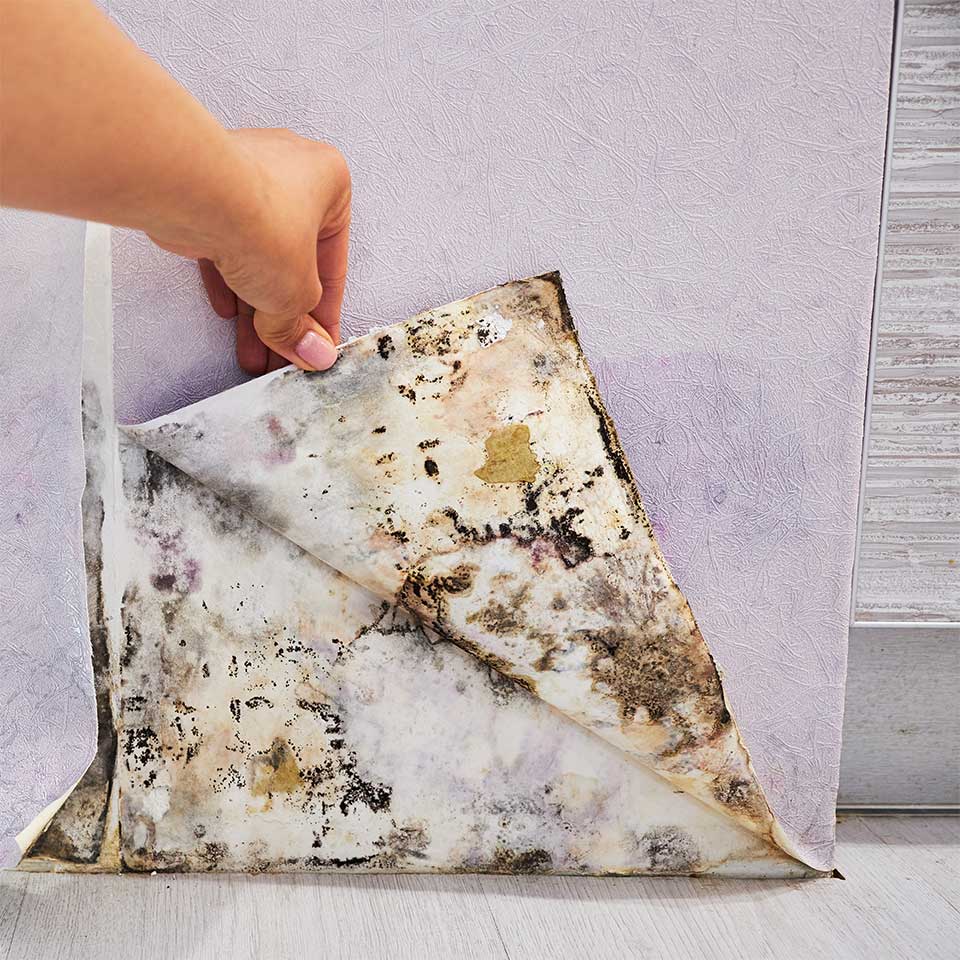
Mould in a council house or housing association property is more than an unpleasant cosmetic problem. Persistent damp and mould can damage your belongings, make parts of your home difficult to use and, most importantly, put your health at risk.
If you have repeatedly reported mould to your council or housing association and the problem has not been properly investigated or repaired, you may be entitled to pursue a housing disrepair claim and seek compensation. However, the presence of mould alone does not automatically mean that compensation will be awarded.
Generally, there needs to be evidence that your landlord was responsible for dealing with the underlying problem, knew or should reasonably have known about it, and then failed to take appropriate action within the required or a reasonable period. Depending on the circumstances, a claim may involve breaches of statutory or contractual duties, negligence, or a combination of these.
At ASL Solicitors, we specialise in housing disrepair claims involving council and housing association properties. Based in Rochdale, we help tenants in Rochdale, Greater Manchester and surrounding areas understand their rights when serious property defects have been left unresolved.
This article explains the law as it applies in England and is accurate as of September 2026. Housing law differs in Scotland, Wales and Northern Ireland.
Can You Claim Compensation for Mould in a Council House?
Potentially, yes. Council and housing association tenants can pursue compensation where mould or damp is linked to a problem for which the landlord is legally responsible and the landlord has failed to deal with it properly.
For example, mould may develop because of a leaking roof, damaged guttering, defective pipework, inadequate ventilation, penetrating damp or another defect within the building. In these circumstances, the landlord may have a responsibility to investigate the cause and complete the necessary repairs.
The Landlord and Tenant Act 1985 places important repairing obligations on landlords. Section 11 requires landlords to keep the structure and exterior of relevant rented homes in repair and to keep installations for water, sanitation, gas, electricity, heating and hot water in repair and proper working order.[1]
Section 9A of the same Act, inserted by the Homes (Fitness for Human Habitation) Act 2018, also implies a requirement into relevant tenancies that a home is fit for human habitation when it is let and remains fit throughout the tenancy.[2] Damp and mould can be relevant when assessing whether a property is fit to live in.
A successful claim therefore does not necessarily depend on proving negligence as a separate legal wrong. A landlord may also be liable because it has breached a repairing obligation, its duty to keep a property fit for human habitation or, in the social housing sector, requirements imposed under Awaab’s Law.
When Might You Be Eligible to Claim?
Every housing disrepair case is different, but a mould compensation claim will normally be stronger where there is evidence of both a serious problem and an inadequate response from the landlord.
Factors that may support a claim include:
- You reported damp or mould to the council or housing association, but repairs were unreasonably delayed or never completed.
- The landlord carried out temporary treatments, such as repeatedly washing or painting over mould, without addressing the underlying cause.
- Inspections identified defects but the recommended work was delayed or not completed.
- A leak, defective roof, damaged gutter, inadequate ventilation or another landlord-controlled defect is contributing to the mould.
- The mould returned after repairs because the underlying defect was not properly resolved.
- Your landlord failed to comply with applicable Awaab’s Law requirements.
- Your health, belongings or ability to use parts of your home have been affected.
- You have records showing repeated reports, missed appointments, complaints or unsuccessful repair attempts.
The history of the problem is extremely important. The Civil Procedure Rules’ Pre-Action Protocol for Housing Conditions Claims specifically recognises claims where a landlord knows about poor housing conditions but they remain unresolved.[3]
Why Evidence That You Reported the Mould Matters
One of the most important parts of a housing disrepair claim is establishing what the landlord knew and when it knew it.
If mould suddenly appears and the landlord is never told about it, it may be difficult to argue that the landlord should have repaired the problem during that period. Once the landlord has been informed, however, its response can become highly relevant.
Evidence can include emails, text messages, online repair reports, complaint correspondence, photographs, videos, inspection reports and records of telephone calls. It is useful to keep photographs showing how the mould develops over time rather than relying on a single photograph.
If contractors have attended, keep a note of when they visited, what they said caused the problem and what work was completed. You should also keep copies of any letters stating that repairs have been raised or scheduled.
Under section 4 of the Defective Premises Act 1972, where the relevant conditions are met, a landlord can owe a duty of care in relation to defects that it knows about or ought in the circumstances to have known about.[4]
When Might You Not Be Entitled to Compensation?
Not every case of mould will result in a compensation claim.
A claim may be more difficult where the landlord was never informed of the problem and had no reasonable way of knowing about it, where the landlord responded appropriately and completed necessary repairs within the applicable timeframe, or where the issue was caused entirely by something that was the tenant’s responsibility.
Similarly, a very small and isolated patch of surface mould will not necessarily amount to a serious housing hazard or make a property unfit for habitation. Government guidance for Awaab’s Law indicates that minor or isolated mould, such as a small patch on grout or sealant with no wider problem or serious health risk, would not usually fall within the significant hazard provisions.[5]
Tenants must also normally provide reasonable access when a landlord needs to inspect the property or carry out repairs. Repeatedly refusing reasonable access can affect a claim and may prevent a landlord from completing necessary work.
However, landlords should not simply dismiss substantial mould as being caused by a tenant’s “lifestyle”. Government damp and mould guidance makes clear that landlords should identify and address the underlying causes of damp and mould rather than placing inappropriate responsibility on residents.[6]
What Is Awaab’s Law?
Awaab’s Law introduced legally enforceable timescales for social landlords in England to investigate and deal with certain hazards.
Phase 1 came into force on 27 October 2025 and applies to significant damp and mould hazards as well as all emergency hazards in social housing.[5]
As of September 2026, a social landlord that becomes aware of a potential significant damp or mould hazard must investigate it within 10 working days. Where the investigation identifies a significant hazard, relevant safety work must be carried out within 5 working days after the investigation concludes. The landlord must normally provide the tenant with a written summary of its investigation within 3 working days.[7]
Where a hazard presents an imminent and significant risk of harm and therefore qualifies as an emergency hazard, the landlord must investigate and complete relevant safety work as soon as reasonably practicable and within 24 hours.[7]
If the landlord cannot make the home safe within the required timeframe, Awaab’s Law can require suitable alternative accommodation to be provided at the landlord’s expense. Landlords must also keep residents updated about the timing and progress of required work.
These requirements form part of the tenancy through provisions inserted into the Landlord and Tenant Act 1985 by the Social Housing (Regulation) Act 2023. They can therefore be enforced through the courts where the relevant requirements have been breached.[8]
Awaab’s Law is being introduced in phases. From 30 November 2026, its significant-hazard requirements are due to expand to additional hazards, including excess cold and heat, falls, structural collapse, fire, electrical hazards and hygiene risks. At the date of this article in September 2026, that second phase is not yet in force.[9]
Who Was Awaab Ishak?
Awaab’s Law is named after Awaab Ishak, a two-year-old boy who lived with his family in a social housing flat in Rochdale.
Awaab died in December 2020. An inquest subsequently concluded that he died as a result of a severe respiratory condition caused by prolonged exposure to mould in his home.
The Coroner’s Prevention of Future Deaths report recorded that significant mould was present throughout the flat by the time of Awaab’s death and that action had not been taken to treat it. The inquest also heard concerns about an excessive focus on the family’s lifestyle rather than sufficiently addressing the mould, ventilation and wider condition of the property.[10]
The case led to major scrutiny of how social landlords respond to damp and mould and ultimately contributed to the introduction of Awaab’s Law.
The tragedy is also an important reminder that mould should not simply be regarded as an issue of appearance or cleanliness. Prolonged exposure can have serious consequences for health.
Why Is Mould Particularly Dangerous for People With Asthma?
Damp and mould can produce allergens, irritants, mould spores and other substances that affect the airways and lungs.
Government health guidance states that damp and mould can cause symptoms including coughing, wheezing and shortness of breath, increase the risk of respiratory infections, and contribute to the development or worsening of conditions including asthma, rhinitis, bronchitis and chronic obstructive pulmonary disease.[6]
People who already have asthma or another respiratory condition can be particularly vulnerable. Exposure to mould may aggravate an existing condition and make respiratory symptoms more difficult to control.
Young children, older people, pregnant women, people with weakened immune systems and people with existing lung or cardiovascular conditions may also be at increased risk. Current government guidance relating to Awaab’s Law specifically identifies asthma and other lung diseases as circumstances that can increase a resident’s vulnerability when a landlord assesses a damp and mould hazard.[5]
If you believe mould is affecting your health, you should seek appropriate medical advice. Medical records can also become important evidence if a compensation claim includes an allegation that housing conditions have caused or worsened an illness.
What Compensation Can You Claim for Mould?
The compensation available depends on the circumstances and the evidence. There is no standard payment that every tenant with mould will receive.
Depending on the case, compensation may potentially cover:
- Loss of use and enjoyment of your home: compensation may reflect the fact that rooms or areas of your property could not be properly used because of damp, mould or associated disrepair.
- Distress and inconvenience: prolonged disrepair, repeated failed repairs and having to chase a landlord can cause considerable disruption.
- Damaged belongings: furniture, clothing, bedding, flooring, curtains and other possessions may be damaged by persistent damp and mould.
- Reasonable additional expenses: depending on the circumstances and evidence, these could include certain increased heating, electricity, cleaning or replacement costs caused by the disrepair.
- Personal injury: where there is appropriate medical evidence establishing that the conditions caused or worsened an illness, a separate personal injury element may potentially form part of a claim.
The Housing Ombudsman can also award compensation where it finds maladministration by a social landlord. Its current guidance provides for compensation in circumstances including financial loss, loss of use of rooms, distress, inconvenience and unnecessary time and trouble.[11]
Housing Ombudsman compensation and damages awarded or negotiated as part of a legal housing conditions claim are not identical. The Ombudsman does not determine legal negligence or personal injury liability in the way a court does. Its guidance expressly recognises that personal injury claims involving an alleged link between landlord failures and ill health may be more appropriately determined through the courts using independent medical evidence.[11]
How Is Mould Compensation Calculated?
There is no universal compensation calculator for council house mould claims.
The value of a claim can depend on how serious the mould was, how much of the property was affected, how long the landlord failed to resolve it, the amount of rent payable, whether important rooms could still be used, the effect on the household and whether there were financial losses or injuries.
For example, widespread mould affecting a child’s bedroom for a prolonged period after repeated complaints is very different from a minor patch of mould that was investigated and repaired promptly.
Evidence is therefore important when assessing compensation. Photographs, repair records, tenancy documents, medical records, receipts and correspondence can all help demonstrate the extent and impact of the problem.
The Housing Health and Safety Rating System
The Housing Act 2004 established the Housing Health and Safety Rating System, usually known as the HHSRS. It is used to assess hazards within residential properties.
Damp and mould growth is one of the hazards considered under the system. The assessment looks at the potential risk of harm to occupants rather than simply whether a property has a particular defect.
Where a local authority identifies a Category 1 hazard, it has a duty to take appropriate enforcement action. It also has powers to take enforcement action in relation to Category 2 hazards.[12]
The HHSRS can therefore be relevant where serious mould poses a risk to a tenant’s health, although the legal routes available can differ depending on whether the property belongs to the council itself or to a housing association.
The Homes (Fitness for Human Habitation) Act 2018
The Homes (Fitness for Human Habitation) Act 2018 strengthened tenants’ rights by inserting section 9A into the Landlord and Tenant Act 1985.
For tenancies within its scope, landlords must ensure that the dwelling is fit for human habitation at the start of the tenancy and remains fit throughout it. A property can be regarded as unfit where its condition is so defective that it is not reasonably suitable for occupation.
The assessment can take account of hazards recognised under the Housing Act 2004, meaning serious damp and mould may form part of a fitness for human habitation claim.[2]
The Landlord and Tenant Act 1985
Section 11 of the Landlord and Tenant Act 1985 is particularly important in housing disrepair cases.
It places repairing obligations on landlords covering the structure and exterior of the home, including drains, gutters and external pipes. It also covers installations for the supply of water, gas and electricity, sanitation, space heating and water heating.[1]
This can be directly relevant to mould. For example, if mould is being caused by a leaking roof, defective guttering or damaged pipework, the underlying defect may fall within the landlord’s repairing responsibilities.
The Defective Premises Act 1972
Section 4 of the Defective Premises Act 1972 can also be relevant in some housing conditions cases.
Where the landlord has an obligation to maintain or repair the premises, the Act can impose a duty to take reasonable care to ensure that people who might reasonably be affected by relevant defects are reasonably safe from personal injury or damage to their property.
Importantly, the statutory wording addresses defects that the landlord actually knows about as well as circumstances in which the landlord ought to have known about the defect.[4]
Do You Need to Prove Your Landlord Was Negligent?
You need evidence showing why the landlord should be legally responsible, but that does not necessarily mean every housing disrepair claim requires a separate negligence claim.
Housing conditions proceedings can arise under sections 9A or 11 of the Landlord and Tenant Act 1985, section 4 of the Defective Premises Act 1972, negligence, nuisance, or the express and implied terms of a tenancy agreement.[3]
In practical terms, evidence of the landlord’s conduct is still extremely important. If you can demonstrate that serious mould was repeatedly reported, inspections took place, repairs were promised and then delayed, or ineffective work was repeatedly carried out, that history can help establish that the landlord failed to meet its responsibilities.
What Evidence Should You Keep?
If you are experiencing unresolved mould, start keeping evidence as early as possible.
- Take dated photographs and videos showing the mould, damp patches and any related leaks or defects.
- Keep emails, texts, repair reference numbers, letters and formal complaints sent to your landlord.
- Record repair appointments, missed appointments and visits from surveyors or contractors.
- Keep photographs and receipts for belongings damaged by damp or mould.
- Keep evidence of reasonable additional expenses caused by the problem.
- If your health is affected, report your symptoms to an appropriate healthcare professional and retain relevant medical correspondence.
You should continue reporting the problem even if you have reported it previously. Where possible, make reports in writing so there is a clear record.
What Should You Do if Your Council or Housing Association Has Not Fixed the Mould?
You should first make sure the problem has been clearly reported to your landlord and give as much information as possible about its extent, location and any health concerns within your household.
If the response is inadequate, you can use your landlord’s formal complaints procedure. Social housing tenants can ultimately take eligible unresolved complaints to the Housing Ombudsman.
However, using a complaints procedure does not necessarily replace your legal rights. The Pre-Action Protocol for Housing Conditions Claims provides a specific process for housing conditions cases, including exchanging information, setting out the history of the defects and, where necessary, obtaining expert evidence.[3]
Legal time limits also apply to claims. Different limitation periods may apply to different parts of a case. For example, the Limitation Act 1980 generally provides a six-year period for an action founded on simple contract, while personal injury claims are generally subject to a three-year period running from the accrual of the cause of action or the injured person’s later date of knowledge, subject to the detailed provisions of the Act.[13]
It is therefore sensible to obtain advice rather than assuming that an old or ongoing problem can be dealt with at any time.
Speak to ASL Solicitors About a Housing Disrepair Claim
If you live in a council or housing association property and have been left with unresolved mould, damp or other serious disrepair, we can assess the circumstances and explain the options that may be available to you.
At ASL Solicitors, we specialise in housing disrepair claims and understand how disruptive it can be when repeated reports and repair requests fail to resolve a problem.
We are based in Rochdale and provide housing disrepair claim services to tenants in Rochdale, Greater Manchester and surrounding areas.
You can find out more about our council and housing association disrepair claims service or get in touch with us to discuss your circumstances.
Frequently Asked Questions
Can I claim compensation for mould in my council house?
You may be able to claim if the mould is linked to disrepair or another problem your landlord is responsible for and the landlord knew, or should reasonably have known, about the problem but failed to deal with it appropriately. Compensation is not automatic simply because mould is present.
Can I claim against a housing association for mould?
Yes. Housing association tenants may have rights under the Landlord and Tenant Act 1985 and other housing legislation. Awaab’s Law also applies to relevant social housing landlords in England, including housing associations.
How long does a council have to fix mould under Awaab’s Law?
As of September 2026, potential significant damp and mould hazards must be investigated within 10 working days. If a significant hazard is found, relevant safety work must normally be completed within 5 working days after the investigation concludes. Emergency hazards must be investigated and made safe as soon as reasonably practicable and within 24 hours.[7]
Can I claim if my landlord keeps painting over the mould?
Potentially. Repeatedly treating the visible mould without resolving the underlying cause may not amount to an adequate repair. Evidence showing that the mould repeatedly returned after treatment can be important.
What if the council says the mould is caused by condensation?
Condensation can contribute to mould, but the cause still needs to be properly considered. Factors such as inadequate ventilation, insufficient heating, insulation problems, cold surfaces and building defects can contribute to condensation. Government guidance states that landlords should identify underlying causes and should not simply dismiss damp and mould as a lifestyle issue.[6]
Can I claim for belongings damaged by mould?
Potentially. A claim may include damage to belongings where there is sufficient evidence linking the damage to a landlord’s breach or failure. Photographs, receipts and other evidence of the value and condition of damaged items can be useful.
Can I claim compensation if mould has made my asthma worse?
A personal injury claim may be possible if appropriate medical evidence can establish a link between the housing conditions and the worsening of your health. Damp and mould are recognised as capable of worsening respiratory conditions including asthma, but medical causation must be assessed on the facts of the individual case.[6]
Do I need photographs to make a mould claim?
Photographs are extremely useful but are not the only form of evidence. Repair records, complaints, landlord inspection reports, medical evidence, correspondence, witness evidence and tenancy records may also help establish what happened.
Do I need to have complained more than once?
There is no rule saying that a tenant must report the same problem a specific number of times before having legal rights. What matters includes when the landlord became aware of the problem, what it was responsible for and whether its subsequent response complied with its obligations.
Can I claim if the mould has now been repaired?
Potentially. Completing repairs does not necessarily erase losses or inconvenience caused by an earlier period of unreasonable delay or breach. However, legal time limits apply, so advice should be sought promptly.
Does Awaab’s Law automatically give me compensation?
No. Awaab’s Law sets legally enforceable requirements for dealing with relevant hazards, but a breach does not create an automatic fixed compensation payment. The circumstances, losses, evidence and appropriate route for redress still need to be considered.
Can the Housing Ombudsman award compensation for mould?
Yes. Where the Housing Ombudsman finds maladministration, it can order compensation in appropriate cases for matters such as distress, inconvenience, financial loss, time and trouble or loss of use of parts of a property. This is different from a court assessing legal damages or personal injury liability.[11]
References
1) Landlord and Tenant Act 1985, Section 11 – Repairing Obligations:
https://www.legislation.gov.uk/ukpga/1985/70/section/11
2) Landlord and Tenant Act 1985, Section 9A – Fitness for Human Habitation:
https://www.legislation.gov.uk/ukpga/1985/70/section/9A
3) Ministry of Justice – Pre-Action Protocol for Housing Conditions Claims (England):
https://www.justice.gov.uk/courts/procedure-rules/civil/protocol/prot_hou
4) Defective Premises Act 1972, Section 4:
https://www.legislation.gov.uk/ukpga/1972/35/section/4
5) Ministry of Housing, Communities and Local Government – Awaab’s Law: Guidance for Tenants in Social Housing:
https://www.gov.uk/government/publications/awaabs-law-guidance-for-tenants-in-social-housing/awaabs-law-guidance-for-tenants-in-social-housing
6) UK Government – Understanding and Addressing the Health Risks of Damp and Mould in the Home:
https://www.gov.uk/government/publications/damp-and-mould-understanding-and-addressing-the-health-risks-for-rented-housing-providers/understanding-and-addressing-the-health-risks-of-damp-and-mould-in-the-home–2
7) Ministry of Housing, Communities and Local Government – Awaab’s Law: Guidance for Social Landlords, Timeframes for Repairs in the Social Rented Sector:
https://www.gov.uk/government/publications/awaabs-law-guidance-for-social-landlords/awaabs-law-guidance-for-social-landlords-timeframes-for-repairs-in-the-social-rented-sector
8) Social Housing (Regulation) Act 2023:
https://www.legislation.gov.uk/ukpga/2023/36/contents
9) Ministry of Housing, Communities and Local Government – Awaab’s Law in the Social Rented Sector:
https://www.gov.uk/government/collections/awaabs-law-in-the-social-rented-sector
10) HM Courts and Tribunals Judiciary – Awaab Ishak: Prevention of Future Deaths Report:
https://www.judiciary.uk/wp-content/uploads/2022/11/Awaab-Ishak-Prevention-of-future-deaths-report-2022-0365_Published.pdf
11) Housing Ombudsman – Compensation Guidance:
https://www.housing-ombudsman.org.uk/landlords-info/guidance-notes/compensation-guidance/
12) Ministry of Housing, Communities and Local Government – Tenant Guide to the Housing Health and Safety Rating System (HHSRS):
https://www.gov.uk/government/publications/housing-health-and-safety-rating-system-hhsrs-tenant-guide/tenant-guide-to-the-housing-health-and-safety-rating-system-hhsrs
13) Limitation Act 1980:
https://www.legislation.gov.uk/ukpga/1980/58/contents