
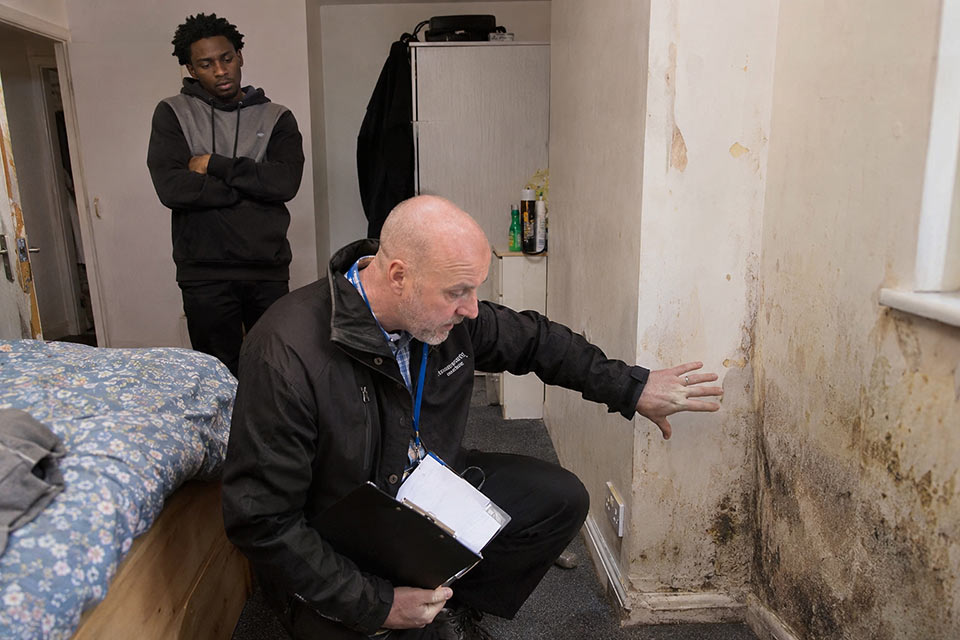
Every tenant has the right to expect their home to be safe and properly maintained. Unfortunately, some people living in council houses and housing association properties experience serious maintenance problems that remain unresolved for months, despite repeatedly reporting them to their landlord.
Persistent damp and mould, broken heating, leaking roofs and dangerous electrical installations are all examples of problems that could constitute housing disrepair. However, not every defect automatically amounts to a breach of a landlord’s legal obligations.
In this guide, we explain the legal definition of housing disrepair, the legislation that applies in England, landlords’ responsibilities and the circumstances in which tenants may be entitled to make a claim.
What Is Housing Disrepair? The Legal Definition
In England, housing disrepair generally refers to deterioration or defects in a rented property that the landlord has a legal or contractual obligation to repair. There is no single statutory definition covering every situation. Instead, the law establishes specific repairing obligations, particularly under Section 11 of the Landlord and Tenant Act 1985. These generally cover the structure and exterior of a property, plumbing, sanitation, heating and certain other installations. [1]
Importantly, the law distinguishes between housing disrepair and a property being unfit for human habitation. Although the two concepts frequently overlap, they are not identical. A broken boiler could constitute disrepair because an existing installation has stopped working, whereas inadequate ventilation caused by a property’s original design might raise questions about its fitness for habitation, even if nothing has physically deteriorated.
Put simply, housing disrepair concerns defects that a landlord is responsible for repairing, while wider housing legislation also protects tenants against unsafe or unsuitable living conditions.
What Laws Govern Housing Disrepair in England?
Several pieces of legislation establish the standards that rented accommodation must meet. These laws are particularly relevant to council and housing association tenants who believe their landlords have failed to maintain their homes.
1. Landlord and Tenant Act 1985: Section 11
Section 11 of the Landlord and Tenant Act 1985 establishes important repairing obligations for landlords. It generally applies to residential tenancies granted for less than seven years, subject to statutory conditions and exceptions. Landlords covered by the provision must maintain the property’s structure and exterior, alongside installations for water, gas, electricity, sanitation, space heating and hot water.
For example, a leaking roof, defective plumbing or broken central heating system may fall within these obligations. However, landlords are not automatically responsible for every defect, particularly where damage results from a tenant’s failure to take reasonable care of the property. The cause of the problem, tenancy agreement and relevant legal exceptions must be considered. [1]
2. Homes (Fitness for Human Habitation) Act 2018
The Homes (Fitness for Human Habitation) Act 2018 amended the Landlord and Tenant Act 1985, requiring relevant rented homes in England to be fit for human habitation at the start of a tenancy and throughout its duration. Factors considered include damp, ventilation, structural stability, sanitation, natural lighting and hazards affecting occupants’ health and safety.
This legislation is significant because a home can be legally unfit for habitation even where its condition does not fall within the traditional definition of disrepair. For example, extensive mould combined with inadequate heating and ventilation could potentially make a property unsuitable for occupation. However, minor defects do not automatically make a home unfit, and statutory exceptions may apply. [2]
3. Housing Act 2004 and the Housing Health and Safety Rating System (HHSRS)
The Housing Act 2004 introduced the Housing Health and Safety Rating System (HHSRS), which assesses potential hazards in residential properties. These include damp and mould, excessive cold, dangerous electrical installations, fire risks and structural problems. Hazards are classified as Category 1 or Category 2 according to their assessed seriousness, with local housing authorities generally required to take appropriate enforcement action where Category 1 hazards are identified.
Unlike traditional disrepair law, HHSRS focuses on the risks that housing conditions pose to occupants. However, identifying a hazard does not automatically establish entitlement to compensation. The landlord’s legal obligations, responsibility for the problem and the circumstances of the individual case must also be considered. [3]
4. Awaab’s Law: Repair Deadlines for Social Housing Landlords
Awaab’s Law introduced legally enforceable timescales for social landlords in England to investigate and address specified serious housing hazards. Its first phase came into force on 27 October 2025, covering emergency hazards and significant damp and mould hazards. Emergency hazards must generally be investigated and made safe within 24 hours, while potential significant damp and mould hazards must generally be investigated within 10 working days, with necessary safety work completed within five working days after the investigation concludes.
A second phase is scheduled to take effect on 30 November 2026, extending the significant-hazard requirements to additional risks, including excessive cold, electrical hazards, fire risks and structural dangers. The legislation also includes requirements concerning written investigation findings, preventative work and alternative accommodation where necessary. The regulations recognise a defence where landlords have used all reasonable endeavours to comply, so missing a deadline does not automatically establish liability in every case. [4][5]
5. Social Housing (Regulation) Act 2023
The Social Housing (Regulation) Act 2023 strengthened the regulatory framework for social housing providers in England, introducing measures designed to improve housing standards, tenant safety and landlord accountability. It also provided the legislative foundation for Awaab’s Law.
Registered social housing providers must comply with regulatory standards overseen by the Regulator of Social Housing, alongside their existing repairing obligations. However, a breach of regulatory standards does not automatically entitle an individual tenant to compensation. Whether a civil claim can succeed depends on the relevant legal obligations and individual circumstances. [6]
What Counts as Housing Disrepair? Common Examples
Housing disrepair can affect almost any part of a property. What matters legally is whether the defect falls within the landlord’s responsibilities and whether those responsibilities have been breached. The following examples illustrate situations that may give rise to claims involving councils and housing associations.
Persistent Damp and Mould
Imagine living in a council house where extensive black mould repeatedly develops on the bedroom walls. You report the problem, and the landlord arranges for the affected areas to be cleaned and repainted. However, the mould returns within weeks. Over the following year, several similar treatments are carried out, but the underlying cause remains unresolved and the mould spreads to other rooms.
Could this constitute housing disrepair? Potentially, yes. If the mould results from defective roofing, water penetration or another problem the landlord is responsible for addressing, there may be grounds for a claim. Serious mould can also raise issues under the fitness for human habitation provisions or Awaab’s Law, even where it does not involve traditional disrepair. However, the underlying cause and severity must be established, as not all condensation or mould is attributable to a landlord’s breach of duty.
Find out more about our damp and mould claims service for council and housing association tenants.
Broken Heating During Winter
Consider a council tenant whose central heating stops working in December. Despite reporting the fault immediately and repeatedly contacting their landlord, three weeks pass without a repair. During this period, the property becomes extremely cold, making everyday living conditions uncomfortable and potentially unsafe.
Could this constitute housing disrepair? Yes. Heating installations generally fall within Section 11 of the Landlord and Tenant Act 1985. Leaving a tenant without adequate heating for several weeks during winter could constitute a breach, particularly where the landlord has failed to respond appropriately. However, liability depends on the circumstances, including the seriousness of the problem, the landlord’s knowledge and the steps taken to arrange repairs.
We assist tenants with heating and hot water disrepair claims. You can also read our guide explaining whether you can claim compensation for broken heating in social housing.
Leaking Roofs and Water Damage
A housing association tenant notices water entering their living room whenever it rains heavily. Although the problem has been reported several times, the landlord carries out only temporary repairs. Over time, the continuing leak damages the plasterwork, flooring and personal belongings.
Could this constitute housing disrepair? Potentially, yes. Roof coverings generally form part of the structure and exterior of a property, which landlords covered by Section 11 are responsible for maintaining. If the landlord fails to take appropriate action after becoming aware of the defect, the tenant may have grounds for a claim.
Our roof disrepair claims service provides further information about pursuing unresolved roofing problems in social housing.
Water Leaks and Defective Plumbing
Faulty plumbing can also constitute housing disrepair. For example, a leaking pipe beneath a kitchen sink could cause extensive damage to flooring and kitchen units if left unresolved. Landlords generally have responsibilities concerning relevant water supply and sanitation installations, although liability will depend on the cause of the defect and the particular circumstances.
If your council or housing association has failed to address a recurring leak, our water leak and plumbing disrepair claims service explains how we may be able to help.
Dangerous Electrical Installations
Electrical defects can constitute housing disrepair where they involve installations that the landlord is responsible for maintaining. For example, a tenant may repeatedly report exposed wiring or sockets that spark when used. If the landlord fails to respond appropriately, particularly where there is a risk of electric shock or fire, this could amount to a breach of its obligations.
Serious electrical faults may also qualify as emergency hazards under Awaab’s Law. Visit our electrical disrepair claims page for further guidance.
Structural Damage and Unsafe Stairs
Structural problems affecting walls, floors, staircases or foundations may also constitute housing disrepair. For example, if a tenant reports an unstable staircase and the landlord fails to take appropriate action, this could create a foreseeable risk of injury and potentially amount to a breach of its repairing obligations.
However, minor cosmetic cracks and ordinary wear and tear do not automatically constitute actionable disrepair. The seriousness, cause and nature of the defect must be considered. Learn more about our structural disrepair claims service.
What Is Not Classed as Housing Disrepair?
Not every problem with a rented property constitutes legally actionable disrepair. Some issues fall outside the landlord’s repairing obligations, while others may not be sufficiently serious to establish a breach.
Minor Cosmetic Defects
Small scuff marks, faded paint, minor decorative imperfections and ordinary signs of ageing will not usually constitute actionable disrepair by themselves. For example, a tenant may dislike the appearance of an older kitchen, but if it remains safe and functional, the landlord is not necessarily legally required to replace it.
Damage Caused by the Tenant
Tenants are generally expected to take reasonable care of their homes. If a tenant deliberately damages an internal door or breaks a fitting through misuse, their landlord may not be responsible for repairing it at their own expense. However, tenant-caused damage does not necessarily remove every statutory obligation the landlord may have, particularly concerning safety.
Condensation Caused by Household Activities
Condensation can develop through everyday activities such as cooking, bathing and drying laundry indoors. Where mould is genuinely caused solely by unreasonable tenant behaviour, a disrepair claim may not succeed. However, landlords should not automatically blame tenants for mould, as inadequate ventilation, insufficient heating and underlying building defects may contribute to the problem.
Problems Being Addressed Within a Reasonable Time
A newly reported defect does not automatically mean the landlord has breached its obligations. For example, if a council promptly arranges appropriate repairs after receiving a report of a leaking pipe, it may have complied with the law. The seriousness of the issue, response time and any applicable statutory deadlines must be considered.
How Long Does a Landlord Have to Fix Housing Disrepair?
There is no universal deadline for every type of housing repair. Under Section 11 of the Landlord and Tenant Act 1985, landlords are generally required to complete necessary repairs within a reasonable time after receiving notice or otherwise having sufficient knowledge of the defect. What is reasonable depends on the circumstances, including the seriousness of the problem, any safety risks and the work required.
However, Awaab’s Law introduces specific deadlines for qualifying hazards in social housing. These requirements take precedence over a landlord’s ordinary repair timescales where the regulations apply. Consequently, a dangerous electrical fault or serious mould hazard may require substantially faster action than a routine maintenance issue.
Does a Landlord Have to Know About the Disrepair Before They Can Be Liable?
For many ordinary repairing claims under Section 11, the landlord will generally need to have received notice of the defect, or otherwise have sufficient knowledge of it, before becoming liable for failing to complete repairs within a reasonable period. For example, if a tenant reports a leaking roof in January and repeatedly follows up over several months, those reports could provide important evidence that the landlord knew about the defect but failed to resolve it.
However, different legal duties can have different requirements concerning notice and knowledge. Tenants should therefore report problems as soon as possible and retain records of correspondence, repair requests and appointments. This evidence can help establish when the landlord became aware of the issue and how it responded.
Can Repeated Failed Repairs Amount to Housing Disrepair?
Yes. Repeated unsuccessful repairs may be relevant when determining whether a landlord has fulfilled its legal obligations. For example, a council might treat recurring damp on several occasions without addressing defective brickwork that allows water to penetrate the property. Although contractors have attended repeatedly, the underlying problem remains unresolved.
However, a failed repair does not automatically establish liability. Some defects can be difficult to diagnose, and a landlord may reasonably attempt a repair that later proves unsuccessful. The legal question is whether the landlord’s investigations, repairs and subsequent actions were sufficient to meet its obligations, considering the circumstances and any applicable statutory deadlines.
Can You Claim Compensation for Housing Disrepair?
Potentially, yes. Where a council or housing association has breached an applicable legal obligation, a tenant may have grounds to pursue a housing conditions claim. Depending on the circumstances, this could involve seeking necessary repairs and compensation for the consequences of the breach, such as loss of enjoyment of the property, inconvenience, damage to belongings or other recoverable losses.
However, compensation is not automatic. The legal basis of the claim, the landlord’s responsibility, available evidence and impact of the problem must all be considered. A tenant experiencing extensive unresolved damp for several years may have a very different case from someone whose minor plumbing problem was repaired promptly.
At ASL Solicitors, we specialise in housing disrepair claims against councils and housing associations. We assess each enquiry individually to determine whether there may be a viable claim, taking account of the property’s condition, the history of the problem and the landlord’s response.
We only pursue housing disrepair claims against councils and housing associations. We do not handle claims against private landlords.
What Should You Do if You Think Your Home Is in Disrepair?
If you believe your landlord is failing to maintain your home, you should report the problem clearly and explain when it began, which areas are affected and whether there are any immediate safety concerns. Where possible, take dated photographs and retain correspondence, repair reference numbers and appointment records. If a repair is attempted but the problem returns, report the recurrence so there is a clear record of the continuing issue.
If the landlord fails to resolve the problem, you may wish to make a formal complaint. The Housing Ombudsman can investigate eligible complaints about social landlords, subject to its rules, and may recommend or order appropriate remedies within its jurisdiction. [7]
Tenants may also be able to pursue a civil housing conditions claim. The Pre-Action Protocol for Housing Conditions Claims (England) establishes procedures intended to encourage the exchange of information and resolution without unnecessary court proceedings. A revised protocol is scheduled to take effect on 30 November 2026, including provisions addressing Awaab’s Law. [8]
For further guidance, read our step-by-step article explaining how to make a housing disrepair claim if you live in council housing.
Does Housing Disrepair Law Differ Across the UK?
Yes. Although this article explains the legal position in England, housing legislation differs across the four UK nations. Scotland has its own repairing standard under the Housing (Scotland) Act 2006, while Wales has separate repairing and fitness requirements under the Renting Homes (Wales) Act 2016. Northern Ireland also has its own legal framework governing landlords’ responsibilities and housing conditions.
Consequently, tenants should seek advice based on the legislation applicable to their property and tenancy. The legal provisions discussed in this article primarily concern England and should not be treated as a complete explanation of housing law throughout the UK.
Unsure Whether Your Housing Conditions Legally Qualify as Disrepair?
Determining whether a housing problem constitutes actionable disrepair is not always straightforward. Two tenants may experience similar defects but have very different legal positions depending on the underlying cause, severity, duration, evidence available and landlord’s response.
At ASL Solicitors, we help social housing tenants understand their rights and assess potential claims against councils and housing associations. Our housing disrepair team is based at our head office in Rochdale, and we assist clients across the UK, subject to the jurisdiction and scope of our services. Consultations can take place remotely by telephone or video call, so you do not ordinarily need to visit our office.
If you are experiencing unresolved disrepair in a council house or housing association property, contact ASL Solicitors to discuss your circumstances. We can review the information you provide and give you a realistic assessment of whether pursuing a housing disrepair claim may be viable.
Frequently Asked Questions About Housing Disrepair Law
What is the legal definition of housing disrepair?
Housing disrepair generally refers to defects or deterioration in a rented property that the landlord has a legal or contractual obligation to repair. In England, Section 11 of the Landlord and Tenant Act 1985 establishes important repairing duties concerning the property’s structure, exterior and certain installations.
Is damp and mould legally classed as housing disrepair?
Damp and mould may constitute housing disrepair where they result from defects the landlord is responsible for repairing. Serious mould may also fall within the fitness for human habitation provisions or Awaab’s Law, depending on the circumstances.
Is a broken boiler classed as housing disrepair?
Yes, a broken boiler or central heating installation may constitute housing disrepair because landlords generally have obligations to maintain heating and hot water installations. Whether a claim is viable depends on the circumstances and the landlord’s response.
How long can a council legally leave repairs unfinished?
There is no single deadline for every repair. Landlords must generally complete necessary repairs within a reasonable period after receiving notice or sufficient knowledge of the defect. Awaab’s Law introduces specific timescales for qualifying serious hazards in social housing.
Can I claim compensation if my landlord keeps carrying out unsuccessful repairs?
Potentially. Repeated unsuccessful repairs may support a claim where the landlord has failed to meet its legal obligations. However, liability depends on the nature of the problem, the landlord’s actions and the circumstances of the case.
Can I claim for housing disrepair if I have not reported the problem?
It may be more difficult to establish a claim if the landlord was unaware of the defect. For many ordinary repairing claims, notice or sufficient knowledge is important. However, different statutory obligations can have different requirements.
Does housing disrepair have to make a property uninhabitable?
No. A property does not need to be legally unfit for human habitation for a landlord to breach its repairing obligations. A defective roof, leaking plumbing installation or broken heating system may constitute disrepair even where the property remains occupied.
Can I sue my housing association for disrepair?
Potentially, yes. Housing association tenants may pursue civil claims where their landlord has breached applicable legal obligations. Depending on the circumstances, remedies may include necessary repairs and compensation.
Can I still claim if my council has finally repaired the problem?
Possibly. Completing repairs does not automatically remove liability for an earlier breach. If the landlord previously failed to meet its obligations and caused recoverable loss or inconvenience, a claim may still be possible, subject to the evidence and applicable limitation periods.
Do I need to go to court to resolve housing disrepair?
Not necessarily. Housing conditions disputes can be resolved through complaints procedures, negotiation or the pre-action process. However, court proceedings may be necessary where a satisfactory resolution cannot be reached.
Does ASL Solicitors handle private landlord disrepair claims?
No. At ASL Solicitors, we specialise in housing disrepair claims against councils and housing associations. We do not pursue housing disrepair claims against private landlords.
References
1) UK Legislation – Landlord and Tenant Act 1985, Section 11: Repairing Obligations
https://www.legislation.gov.uk/ukpga/1985/70/section/11
2) UK Legislation – Landlord and Tenant Act 1985: Fitness for Human Habitation
https://www.legislation.gov.uk/ukpga/1985/70
3) UK Legislation – Housing Act 2004, Part 1: Housing Conditions and Hazards
https://www.legislation.gov.uk/ukpga/2004/34/part/1
4) Ministry of Housing, Communities and Local Government – Awaab’s Law: Guidance for Tenants in Social Housing
https://www.gov.uk/government/publications/awaabs-law-guidance-for-tenants-in-social-housing/awaabs-law-guidance-for-tenants-in-social-housing
5) Ministry of Housing, Communities and Local Government – Awaab’s Law Phase 2: Guidance for Social Landlords
https://www.gov.uk/government/publications/awaabs-law-phase-2-guidance-for-social-housing-landlords/awaabs-law-phase-2-guidance-for-social-landlords
6) UK Legislation – Social Housing (Regulation) Act 2023
https://www.legislation.gov.uk/ukpga/2023/36/contents
7) Housing Ombudsman Service – Damp and Mould: Guidance and Complaints
https://www.housing-ombudsman.org.uk/centre-for-learning/support-guides/damp-and-mould/
8) Ministry of Justice – Pre-Action Protocol for Housing Conditions Claims (England), Including the Revised Protocol Approved for 30 November 2026
https://www.justice.gov.uk/courts/procedure-rules/civil/protocol/prot_hou
https://www.justice.gov.uk/documents/housing-conditions-pap-update.pdf
Legal information reviewed: 16 November 2026. This article provides general information about housing law in England and does not constitute advice on individual circumstances. Legislative requirements and procedures may change.