
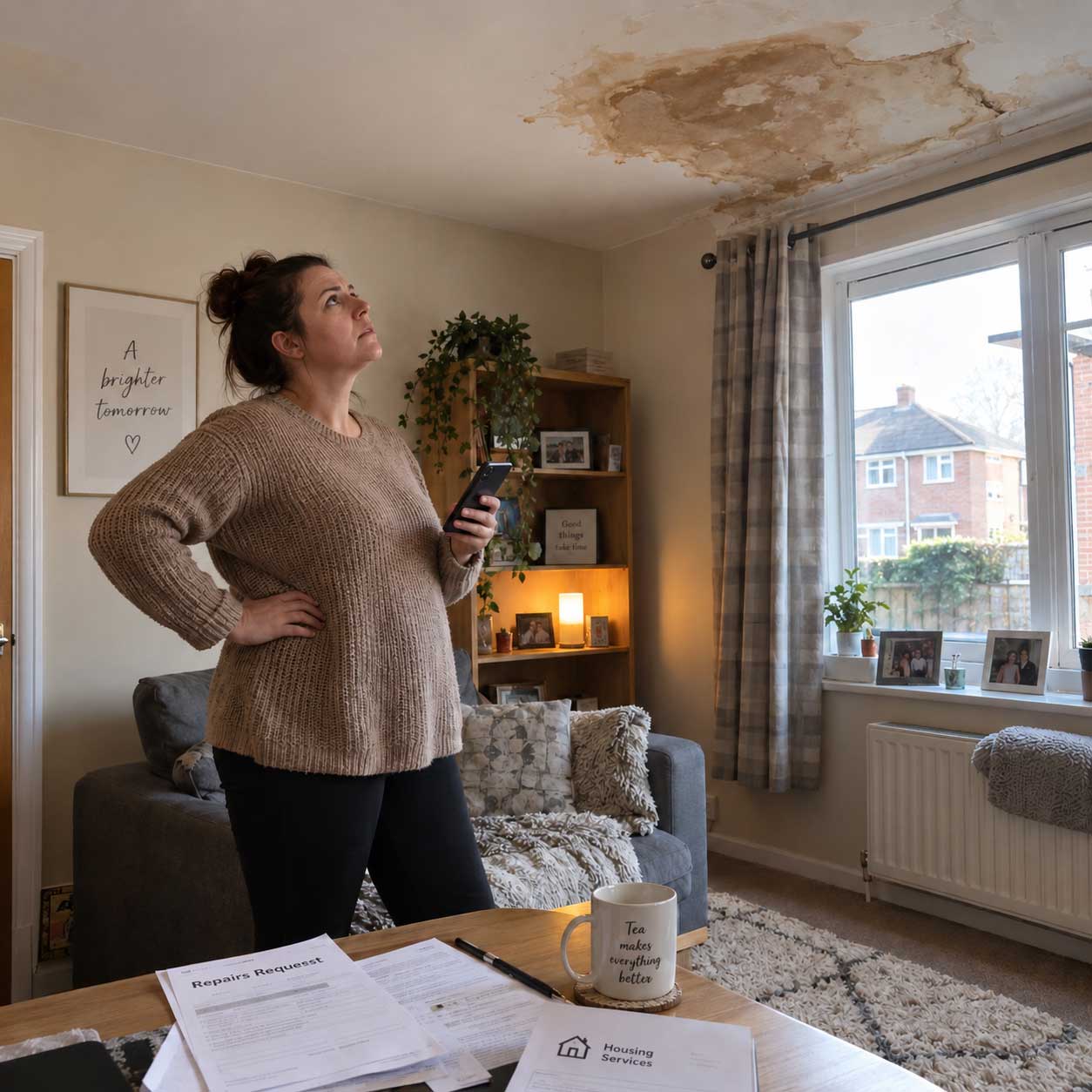
If you have been living with damp, mould, leaks, faulty heating, structural problems or another unresolved repair issue, you may be wondering how long a housing disrepair claim will take.
Unfortunately, there is no single answer. Some housing disrepair claims can be resolved relatively quickly when a council or housing association accepts responsibility and agrees to carry out the necessary work. Others take considerably longer, particularly where the cause of the problem is disputed, expert evidence is required or court proceedings become necessary.
The important point is that every case is different. The condition of the property, how long the landlord has known about the problem, the evidence available and the landlord’s response can all affect the overall timescale.
At ASL Solicitors, we deal with housing disrepair claims involving councils, local authorities and housing associations. We do not provide housing disrepair claim services against private landlords. After reviewing the circumstances of a case, we can usually give a more useful indication of the likely process and the factors that may affect its duration.
How long does a housing disrepair claim usually take?
There is no official average duration for a housing disrepair claim. A relatively straightforward claim may sometimes be resolved within a few months, while a more complicated or heavily disputed case can take considerably longer.
It is useful to think of the claim as a series of stages rather than expecting every case to follow a fixed timetable. Before court proceedings are started, housing conditions claims in England will normally follow the Pre-Action Protocol for Housing Conditions Claims.[1]
The purpose of the protocol is to encourage both sides to exchange information, identify the issues, arrange necessary expert evidence and try to resolve the dispute without court proceedings. One of its stated aims is to avoid unnecessary litigation and ensure repairs and any appropriate compensation are dealt with as quickly as reasonably possible.
What happens at the beginning of a housing disrepair claim?
Before beginning a claim, it will normally be necessary to establish what has gone wrong with the property, when the problem was first reported and what the landlord did in response.
This can involve reviewing repair logs, emails, photographs, complaint responses, contractor visits and previous inspections. A solicitor may also need to establish whether the council or housing association was given sufficient notice of the problem.
This initial investigation is important because a landlord will not necessarily be liable simply because a property has developed a defect. In many claims, a key issue is whether the landlord knew, or should have known, that repairs were required and then failed to take appropriate action within a reasonable period.
A case with several years of well-organised repair records may be relatively easy to assess. A claim involving incomplete records, conflicting repair reports or uncertainty about the underlying cause of the problem may require more investigation.
The Letter of Claim and the 20-working-day response period
Once sufficient information has been obtained, a formal Letter of Claim can be sent to the landlord under the Pre-Action Protocol.
The letter should set out the conditions complained of, the history of the problem, the legal basis of the claim and the remedies being sought. Relevant documents and information about any proposed expert inspection can also be included.
Under the current protocol, the landlord should normally respond within 20 working days of receiving the Letter of Claim. A failure to respond within that period is considered a breach of the protocol, and the tenant may then be entitled to issue court proceedings.[1]
This does not mean that every claim will be resolved after 20 working days. The landlord may dispute some aspects of the claim, request further information, propose repairs or agree that expert evidence is required.
Will an expert need to inspect the property?
An independent expert inspection can be an important part of a housing disrepair claim, particularly where the cause or extent of the problem is disputed.
For example, there can be disagreement about whether mould is being caused by a structural defect, inadequate ventilation, penetrating damp, a leaking pipe or another issue. Structural cracking, water ingress and recurring plumbing problems can also require specialist assessment.
Under the Housing Conditions Pre-Action Protocol, where a single joint expert or joint inspection is used, the inspection should normally take place within 20 working days of the landlord’s response to the Letter of Claim. The expert’s report or agreed schedule should generally then be produced within 10 working days of the inspection.[1]
These are protocol timescales rather than a guarantee that the entire claim will be concluded within that period. Availability of experts, the complexity of the defect and whether further investigation is required can affect how quickly this stage is completed.
What factors can make a housing disrepair claim take longer?
Two tenants experiencing apparently similar problems can have claims that take very different amounts of time. Some of the most important factors include:
- Whether the landlord accepts responsibility. A claim may progress more quickly where liability is admitted than where the council or housing association disputes that it was responsible for the defect.
- The complexity of the disrepair. A straightforward broken heating system may be easier to investigate than recurring damp caused by several possible defects.
- How much evidence is available. Repair records, photographs, complaint correspondence and contractor reports can help establish a clear history.
- Whether expert evidence is needed. Surveyors, engineers or medical experts may be required in more complex cases.
- Whether the repairs are still outstanding. Negotiations may involve both compensation and a detailed programme of remedial works.
- Whether the disrepair has caused an injury or illness. A related personal injury claim may require separate medical evidence.
- How the landlord responds. Delayed disclosure, disputed evidence or missed deadlines can increase the length of the claim.
- Whether court proceedings are necessary. Cases that reach court will generally take longer than those resolved during the pre-action process.
How long do repairs take during a claim?
The timescale for carrying out repairs is not necessarily the same as the timescale for settling the compensation element of a claim.
A landlord may agree to carry out repairs while negotiations about compensation continue. In other cases, there may be disagreement about what work is actually required.
The law does not provide one universal deadline covering every possible repair. What amounts to a reasonable period can depend on the seriousness of the problem, the work required and the risks posed to the occupants.
However, some hazards in social housing are now subject to specific deadlines under Awaab’s Law.
Does Awaab’s Law affect repair times?
Yes. Awaab’s Law introduced legally enforceable repair timescales for specified hazards affecting social housing in England. The first phase came into force on 27 October 2025.[2]
As of September 2026, emergency hazards covered by the legislation must generally be investigated and made safe within 24 hours. Significant damp and mould hazards must generally be investigated within 10 working days and made safe within five working days after the investigation has concluded. A written summary must normally be provided within three working days following the investigation.[3]
These deadlines relate to the landlord’s obligations to investigate and address hazards. They do not mean that a compensation claim arising from a previous failure will automatically be completed within the same period.
The Government has announced a further expansion of Awaab’s Law from 30 November 2026, extending the significant-hazard requirements to areas including excess cold and heat, electrical hazards, fire and explosion risks, structural collapse and certain fall hazards.[4]
Do most housing disrepair claims go to court?
No. Court proceedings are not the starting point for a housing disrepair claim.
The Pre-Action Protocol is specifically designed to encourage landlords and tenants to exchange evidence and attempt to resolve the dispute before proceedings become necessary. Where the council or housing association agrees to appropriate repairs and acceptable compensation, the matter may be settled without a trial.
Even when court proceedings are issued, a case can still settle before reaching a final hearing. Issuing proceedings does not automatically mean that the tenant will have to attend a trial.
What happens if a housing disrepair claim goes to court?
If negotiations do not resolve the dispute, proceedings can be issued in the County Court. The landlord will then have an opportunity to respond formally to the claim.
The court will decide how the case should be managed. Depending on the circumstances, this can involve directions requiring the parties to exchange evidence, disclose documents, obtain expert reports, file witness statements and attempt further negotiation before a trial takes place.
The court may ultimately determine whether the landlord breached its legal obligations, what repair work must be undertaken and what compensation, if any, should be awarded.
Going to court can therefore add a significant amount of time to a claim.
How long can a court case take?
There is no reliable official figure specifically stating how long the average housing disrepair case takes to reach trial. Court waiting times also vary according to the track to which a case is allocated and the workload of the relevant County Court.
The latest Ministry of Justice Civil Justice Statistics available at the time of writing were published on 3 September 2026 and cover April to June 2026. Across County Court civil claims generally, the median period between a claim being issued and reaching trial was 41 weeks for small claims and 55.9 weeks for fast, intermediate and multi-track claims.[5]
These figures are not specific to housing disrepair claims and should not be treated as a prediction for an individual case. They do, however, illustrate why a case that requires a contested trial can take considerably longer than one resolved through negotiation.
The pre-action stage will also normally have taken place before proceedings are issued, so the overall duration of a litigated housing disrepair claim can exceed a year in some circumstances.
What laws apply to housing disrepair claims?
Several pieces of legislation can potentially apply to poor housing conditions. The precise legal basis depends on the tenancy and the nature of the defect.
- Landlord and Tenant Act 1985, section 11: requires landlords covered by the legislation to keep the structure and exterior in repair and to keep installations for water, gas, electricity, sanitation, space heating and water heating in repair and proper working order.[6]
- Homes (Fitness for Human Habitation) Act 2018: inserted sections 9A to 9C into the Landlord and Tenant Act 1985. It requires relevant rented homes in England to be fit for human habitation at the beginning of the tenancy and throughout it. Courts can order a landlord to comply where the obligation has been breached.[7]
- Defective Premises Act 1972: section 4 can impose a duty of care where a landlord has an obligation or relevant right to maintain or repair premises. It can be relevant where a defect causes personal injury or damage.[1]
- Housing Act 2004 and HHSRS: the Housing Health and Safety Rating System provides a framework for assessing hazards in residential property, including risks associated with damp and mould, excess cold, fire, electrical hazards and structural problems.[8]
- Social Housing (Regulation) Act 2023 and Awaab’s Law: the 2023 Act introduced the framework allowing legally binding deadlines to be imposed on social landlords for remedying qualifying hazards. The detailed requirements are contained in the Hazards in Social Housing (Prescribed Requirements) (England) Regulations 2025.[9]
- Limitation Act 1980: legal claims must be started within the applicable limitation period. Different periods can apply depending on the cause of action and whether personal injury is involved, so tenants should not assume that an unresolved repair problem means they can wait indefinitely before seeking advice.[10]
The Housing Conditions Pre-Action Protocol expressly recognises claims under sections 9A and 11 of the Landlord and Tenant Act 1985, section 4 of the Defective Premises Act 1972, negligence, nuisance and contractual obligations.[1]
Does a personal injury element make a claim take longer?
It can do. Some housing conditions cause or worsen health problems. Damp and mould may aggravate respiratory conditions, while leaks, defective flooring or structural defects can cause physical injuries.
Where compensation is being sought for an injury or illness, medical evidence may be required to establish the diagnosis, prognosis and whether the housing conditions caused or materially contributed to the problem.
The Housing Conditions Pre-Action Protocol states that where a personal injury element requires expert medical evidence beyond a GP’s letter, the Personal Injury Pre-Action Protocol may also need to be followed for that part of the claim.[1]
This additional evidence can increase the overall duration of a case.
Can I make the claim quicker by gathering evidence?
Providing clear evidence at an early stage can help a solicitor assess the case more efficiently.
Useful evidence can include photographs or videos of the disrepair, repair reference numbers, emails and messages sent to the landlord, complaint responses, details of contractor visits, copies of inspection reports and receipts for expenses caused by the problem.
It can also help to write down approximately when each problem was first reported and what happened afterwards. This creates a repair chronology and can make it easier to establish when the landlord became aware of the problem.
Tenants should also continue to provide reasonable access for inspections and repairs. A landlord may seek to defend a claim by arguing that it could not carry out work because access was refused.
Should I wait for my landlord’s complaints procedure to finish?
A formal complaint can be useful, particularly because it creates written evidence of what was reported and how the landlord responded.
However, the complaints process and a legal housing conditions claim are not the same thing. There may also be circumstances where waiting is inappropriate, including serious safety concerns or an approaching limitation deadline.
If you are unsure, obtaining legal advice early can help establish the appropriate route.
How ASL Solicitors can help with a housing disrepair claim
At ASL Solicitors, we represent eligible tenants in housing disrepair claims against councils, local authorities and housing associations. We do not provide this claims service for tenants of private landlords.
We can review the history of the disrepair, establish what was reported to your landlord, consider the relevant legal obligations and advise on the evidence that may be required. Where appropriate, we can follow the Housing Conditions Pre-Action Protocol, obtain expert evidence, pursue repairs and compensation and advise you if court proceedings become necessary.
Because every housing disrepair case is different, speaking to a specialist solicitor is the best way to obtain a more realistic assessment of how long your particular claim may take.
We are based in Rochdale and provide housing disrepair claim services to eligible social housing tenants in Rochdale, Greater Manchester and surrounding areas.
If your council or housing association has repeatedly failed to deal with reported disrepair, get in touch with ASL Solicitors to discuss your circumstances.
Frequently Asked Questions
How long does a housing disrepair claim take?
There is no fixed timescale. A straightforward claim that is accepted by the landlord may be resolved within a few months, while disputed claims involving expert evidence or court proceedings can take considerably longer. A solicitor can give a more useful indication after reviewing the circumstances of the individual case.
How long does a council have to respond to a housing disrepair Letter of Claim?
Under the Pre-Action Protocol for Housing Conditions Claims in England, a landlord should normally respond to a formal Letter of Claim within 20 working days. Failure to respond within that period can amount to a breach of the protocol.
How quickly should an expert inspect my property?
If a single joint expert or joint inspection is required under the Housing Conditions Pre-Action Protocol, the inspection should normally take place within 20 working days of the landlord responding to the Letter of Claim. The report or agreed schedule should usually follow within 10 working days of the inspection.
Do housing disrepair claims usually go to court?
Most claims are intended to be resolved without a trial. The Pre-Action Protocol encourages tenants and landlords to exchange evidence and attempt settlement before proceedings are issued. Even where proceedings begin, the parties can still reach an agreement before trial.
How long does a housing disrepair court case take?
There is no housing-disrepair-specific national average. Ministry of Justice figures for April to June 2026 show that County Court civil claims reaching trial took a median of 41 weeks from issue for small claims and 55.9 weeks for fast, intermediate and multi-track cases. A housing claim may be shorter or longer depending on its circumstances.
Can repairs be completed before my compensation claim is settled?
Yes. Repairs and compensation do not necessarily have to be resolved at the same time. A council or housing association may carry out the necessary work while negotiations about compensation continue.
Will a complicated repair make my claim take longer?
Potentially. Problems involving structural movement, recurring damp, hidden leaks or uncertainty about the cause of a defect may require expert investigation. This can make the claim longer than a case where the cause and necessary repair are already clear.
Can I claim if my landlord eventually carried out the repairs?
Potentially. Completing the repairs does not automatically prevent a claim relating to an earlier period of unreasonable delay. Whether compensation is available will depend on matters including the landlord’s responsibilities, when it became aware of the problem and how the disrepair affected you.
Does ASL Solicitors deal with claims against private landlords?
No. Our housing disrepair claims service is for eligible claims against councils, local authorities and housing associations. We do not handle housing disrepair claims against private landlords.
This article relates primarily to social housing in England and is accurate to September 2026. Housing law and procedure differ in Wales, Scotland and Northern Ireland.
References
1) Ministry of Justice – Pre-Action Protocol for Housing Conditions Claims (England):
https://www.justice.gov.uk/courts/procedure-rules/civil/protocol/prot_hou
2) Ministry of Housing, Communities and Local Government – Awaab’s Law in the Social Rented Sector:
https://www.gov.uk/government/collections/awaabs-law-in-the-social-rented-sector
3) Ministry of Housing, Communities and Local Government – Awaab’s Law: Guidance for Tenants in Social Housing:
https://www.gov.uk/government/publications/awaabs-law-guidance-for-tenants-in-social-housing/awaabs-law-guidance-for-tenants-in-social-housing
4) Ministry of Housing, Communities and Local Government – Awaab’s Law Regulations:
https://www.gov.uk/government/publications/awaabs-law-regulations
5) Ministry of Justice – Civil Justice Statistics Quarterly: April to June 2026:
https://www.gov.uk/government/statistics/civil-justice-statistics-quarterly-april-to-june-2026/civil-justice-statistics-quarterly-april-to-june-2026
6) UK Legislation – Landlord and Tenant Act 1985, Section 11:
https://www.legislation.gov.uk/ukpga/1985/70/section/11
7) UK Legislation – Homes (Fitness for Human Habitation) Act 2018:
https://www.legislation.gov.uk/ukpga/2018/34
8) UK Legislation – Housing Health and Safety Rating System (England) Regulations 2005:
https://www.legislation.gov.uk/uksi/2005/3208/contents
9) UK Legislation – Social Housing (Regulation) Act 2023:
https://www.legislation.gov.uk/ukpga/2023/36/contents
10) UK Legislation – Limitation Act 1980:
https://www.legislation.gov.uk/ukpga/1980/58/contents